Showing posts with label #lescollagesadom. Show all posts

Wednesday, May 21, 2025

LeDomduVin: What are the differences between Japanese and Scotch Whisky?


Japanese vs Scotch Whisky by @ledomduvin 2025 (*)


What are the differences between 

Japanese and Scotch Whisky? 


I was recently requested to help sell Scottish and Japanese whisky to a private buyer. Although I could be considered an expert in wine due to my 33 years of experience in buying, selling, managing, promoting, writing about, and serving as a sommelier and wine buyer, I must admit that my knowledge of spirits, and particularly whiskies, despite enjoying some occasionally, is not as extensive as I thought it was. 

So, to prepare for the sale, I had to research and learn more about whiskies, especially the differences between Japanese and Scotch whisky, as the private buyer targeted those. As always, this inspired me to write a post about my findings and share them with you.  

In summary, Japanese whisky is generally lighter, less smoky, and more experimental, while Scotch whisky offers a broader range of flavors rooted in tradition and regional styles. 

The main differences between Japanese and Scotch whisky lie in their origin, production, flavor profiles, and regulations. 

Yet, as the history, places, and numbers of distilleries in Scotland would be too long to explain and summarize, I will focus mainly on general facts about Japanese Whisky for this post.   


Japanese Whisky Historical Context (**)


To provide context, Scotch whisky has a centuries-old heritage that dates back to at least the 15th century. The earliest written mention is from 1495. Whisky (in Scotland, England, Canada, and Japan) or whiskey (in Ireland and the USA) is a spirit with Celtic origins.

Although its exact origin remains uncertain, Scotland and Ireland played pivotal roles in its development. The Irish named it "usquebaugh" (or uisce beatha), while the Scots called it "uisge beatha," both meaning "water of life." 

This is a direct translation from Latin, "aqua vitae," meaning "water of life." The term reflects the historical belief that distilled spirits like whisky had medicinal qualities and were viewed as a life-sustaining elixir. 

Eventually, this spirit spread to England, gaining popularity there, where the name was Anglicized to whisky.

Ireland first used the word "whiskey" in 1875; the "e" was added to help distinguish its produce from that of its Scottish counterparts in the American market. The US adopted the word "whiskey" instead of "whisky." 


On the other hand, the story of Japanese whisky only began in the 1920s. Inspired by Scotch, it was developed with Japanese craftsmanship and local influences.   

Although whisky production in Japan began around 1870, the first commercial production started in 1923 upon the opening of the country's first whisky distillery, Yamazaki.

It all began with two influential figures in Japanese whisky history: Shinjiro Torii and Masataka Taketsuru. Torii, a pharmaceutical wholesaler, founded Kotobukiya (now Suntory). He initially imported Western liquor and created the "Akadama Port Wine" brand, based on Portuguese wine, achieving success. Unfulfilled, he pursued his true passion: crafting Japanese whisky for locals. Despite opposition from local executives, Torii built Japan's first whisky distillery in Yamazaki, a Kyoto suburb known for its excellent water.

Torii hired Taketsuru as a distillery executive. After studying distilling in Scotland, Taketsuru returned to Japan in the early 1920s to recreate the style of Scottish whisky. While working at Kotobukiya (now Suntory), he assisted Torii in establishing the "Yamazaki" Distillery. 

A few years after opening the distillery and allowing enough time for aging, the first whisky produced in Japan was the Suntory Shirofuda, released in 1929.

In 1934, Taketsuru left to form "Dainipponkaju" (later renamed Nikka) and established the "Yoichi" distillery in Hokkaidō.

Following World War II, the popularity of Japanese whisky grew in the 1950s. At that time, the three major brands—Suntory, Daikoku Budoshu (later known as Mercian Corporation), and Nikka—competed against each other, resulting in the "whisky wars." 

Pairing whisky with Japanese cuisine gained traction in the 1960s, and the "Bottle keep" system became common in bars. Drinking mizuwari, a whisky mixed with two to two-and-a-half times the amount of water, also became popular.

In 1971, restrictions on whisky trade were lifted, allowing Japanese importers to bring in foreign whisky without limits. In 1973, Kirin Company entered the whisky business.  

After peaking in 1983, whisky consumption in Japan declined significantly, falling behind beer, shōchū, and sake. By 2008, only 20% of the 1983 level of consumption remained.

Between 1983 and 2008, the decline in whisky consumption in Japan led to a halt in production and the closure of distilleries due to decreased demand. 

In fact, before 2000, the market for Japanese whiskies was predominantly domestic. However, this changed in 2001 when Nikka's 10-year-old Yoichi single malt received the "Best of the Best" award at Whisky Magazine's awards. From then on, Japanese Whisky slowly gained more international recognition.


Bob Harris (Bill Murray) - For Relaxing Times, Make it Suntory Time! Scene - 
Snapshot courtesy of 'Lost in Translation' 2003 (written and directed by Sofia Coppola)


In 2003, the film "Lost in Translation", starring actor Bill Murray’s character Bob Harris, popularized Japanese whisky in real life from his famous fictional Japanese “Suntory Time” commercial, featuring 17-year-old blended Hibiki. 

At the 2003 International Spirits Challenge, Suntory's Yamazaki won a gold medal. In 2004, 18-year-old Yamazaki entered the U.S. In the following years, Japanese whiskies, especially from Suntory, have won top honors in international competitions, further cementing and increasing the reputation of Japanese whisky worldwide.   

As the rest of the world witnessed the gradual rise of Japanese whisky, whisky's declining consumption in Japan experienced a renaissance around 2008, thanks to the highball craze (a mixed drink of an alcoholic base and a larger proportion of a non-alcoholic mixer, often carbonated) and renewed demand.

In 2008, the Chichibu distillery began operations, marking the first new whisky production license granted by the Japanese government in 35 years. The success of this distillery has encouraged sake and shōchū companies, along with businesses from other sectors, to venture into the whisky market, leading to the construction of distilleries all over Japan.

As of 2011, there were about nine active whisky distilleries in Japan. As of October 2022, there were 59 whisky distilleries in Japan, including those under construction and those planned.

Suntory whiskies continued to win gold medals annually through 2013, with all three malt whiskies earning trophies in 2012 (Yamazaki 18 years old and Hakushu 25 years old) or 2013 (Hibiki 21 years old). Suntory also received the distiller of the year award in 2010, 2012, and 2013, inspiring Japan's distilleries to pursue international markets.

Japanese whisky has won the world's highest award in some category at the World Whiskies Awards, organized by Whisky Magazine, each year from the inaugural event in 2007 until 2022. Whisky Magazine has conducted a series of blind tastings that have included Japanese single malts and malts from distilleries regarded as some of the best in Scotland. On multiple occasions, the results have shown that Japanese single malts (particularly those from Nikka's Yoichi and Suntory's Yamazaki) scored higher than their Scottish counterparts.


Drawings / Images courtesy of https://thejapanesebar.com/japanese-whisky/


Whisky Distillery Procedure


As Japanese whisky was inspired by Scotch whisky, it generally follows the same production process. In brief, the whisky distillation procedure consists of several stages: malting, mashing, fermentation, distillation, maturation, and bottling. First, the grain is malted to convert starches into fermentable sugars. This is followed by mashing, which extracts the sugars from the grain. Fermentation then transforms the sugars into alcohol, which is concentrated through distillation. Finally, the whisky is aged in oak barrels for at least three years and bottled for consumption. 

The only things that might differ are using different grains, distillation processes (using Copper Pot Still or Continuous Column Still), adding caramel for color and taste, and the type of wood used in the aging process, depending on the desired style. These differences only rely on the distillery style, traditions, and geographic location. 


Differences in Production

As mentioned, Japanese whisky commercial production only began in the 1920s and primarily gained popularity from the 1950s. However, there were only a few distilleries then, and production quantities were limited. Furthermore, between 1983 and 2008, the decline in whisky consumption in Japan caused a halt in production and the closure of distilleries due to reduced demand. This explains why some whiskies are extremely rare and expensive, as they were never produced again. 

Additionally, the high demand and low supply, combined with tiny production and the increasing popularity of Japanese whisky over the last 15 years, drove prices up, especially for rarer products. 

Even though the number of distilleries increased from 9 in 2011 to 96 in 2024 (103 if we count the ones under construction and planned), offering more accessible mass-market whiskies to satisfy local and worldwide demand, Japanese Whiskies generally remain more expensive than Scottish whiskies.  

Scotland has been the biggest producer of whisky in the world for at least 100 years. Some have been producing Scottish whisky for centuries among the hundreds of distilleries scattered all over Scotland. Moreover, except for some special cuvees and limited editions, most distilleries in Scotland produce rather large quantities of their flagship whiskies compared to Japanese distilleries.    

Numerous Japanese distilleries create small batches of whisky, prioritizing quality over quantity. This limited output produces a scarcity of specific whiskies, driving up demand and prices. As a result, collectors and enthusiasts frequently pay a premium for these rare and exclusive bottles.


Differences in Philosophy and Style

Japanese whisky emphasizes refinement, balance, and technical precision, prioritizing smoothness and complexity over intensity. Scotch whisky highlights tradition and consistency, often preserving centuries-old flavor profiles.

The water sources and the type of wood used for the barrels impart different tasting notes. Japanese producers use a rare Japanese oak tree called Mizurana to mature their whisky, creating a flavor consumers won't get from Scotch. In contrast, Scottish distilleries generally prefer ex-bourbon or sherry barrels.

Japanese whisky often employs various distillation methods, including copper pot stills and continuous column stills, low pressure, and multiple yeasts, to create flavor profiles. 

Scotch whisky typically uses traditional pot still distillation; in some regions, peated barley is incorporated to impart a smoky flavor.

Although both Japanese and Scotch whisky must be aged for at least three years in oak casks, their styles differ because Scotch must be distilled and matured in Scotland under strict regulations, using malted barley and occasionally other grains, generally aged in Sherry or Bourbon casks. 

Meanwhile, Japanese whisky, modeled after Scotch, has fewer legal restrictions, allowing for more experimentation with various grains (barley, corn, wheat, rice) and cask types (sherry, bourbon), including the rare Japanese Mizunara oak, which imparts unique flavors. 

Climate also influences their differences in style, as Japan’s hot summers and cold winters accelerate whisky maturation, creating deeper flavors in a shorter time than Scotland’s cooler and more humid climate, which retards aging.

As a result, Japanese whisky tends to be lighter, more delicate, and less peated, often featuring floral, fruity, and spicy notes. Scotch whisky varies widely but is generally smokier and peatier, especially those from coastal or island regions where peat is used extensively in malting barley.

Japanese whisky is recognized for its elegant, refined style. At the same time, Scotch is known for its diverse and often more pronounced spirits, usually boasting stronger peated and smokier flavors than its Japanese counterparts. 

Nikka Whisky Single Malt Yoichi is likely the Japanese whiskey most resembling Scotch. Founder Taketsuru selected Yoichi in Hokkaido for its similarity to Scotland, especially its relative climate. Nikka Yoichi presents similarities with Scotch with aromas and flavors such as grass, peat, smoke, and fruits.


Prelude to the regulations


Despite a few details, regulations for Japanese whisky are now similar to those for Scotch whisky. 

Yet, until the most recent regulations in 2024, the rules for Japanese whiskey were not as strict and allowed certain flexibilities, which are now regarded as unlawful. 

In 1971, restrictions on the whisky trade were lifted, allowing Japanese importers to bring in foreign whisky without limits. Japanese importers and distilleries started to blend some Japanese whiskies with scotch. Back then, this practice was authorised to make Blended Scotch. The distilleries were only a few; thus, consumption and demand were larger than the supply, so blending Japanese whisky with scotch was an easy solution to fix the problem.  

However, as mentioned earlier, between 1983 and 2008, Japanese whiskey consumption decreased, leading to the closure of some distilleries and a halt to production. Yet, simultaneously, from the early 2000s, Japanese whiskey was gaining popularity with consumers in the Western world, receiving more recognition from critics and winning more medals in international competitions.      

Consequently, prices started to rise, and limited editions of older Japanese whiskies, which were no longer produced (due to the closure of the distilleries and halt of production), began to trigger the interests of connoisseurs and collectors, often reaching record heights at Auctions in the 2000s and 2010s, led by brands such as Yamazaki, Hibiki, Karuizawa, Ichiro and Nikka.

Karuizawa, for instance, is a legendary distillery located on the slopes of the volcanic Mount Asama, known for producing heavyweight whiskies primarily for blending, with few bottled as single malts prior to the site’s closure in 2000. After Karuizawa was dismantled, the remaining casks were distributed among a select group of bottlers who appreciated their unique character and quality. Many of these were ex-sherry casks that resulted in dark, rich whiskies with an exceptionally complex profile. Series such as the Karuizawa Geishas from Elixir Distillers are celebrated worldwide and remain among the rarest and most expensive Japanese whiskies ever bottled.

This situation led to an increase in the number of fake and counterfeit Japanese whiskies on the market, often made with imported whiskies blended and sold with false Japanese labels. Yet, it also increased consumption and demand in the Japanese market (and worldwide).  

In 2008, the Japanese government started to grant permission to build new distilleries to increase the supply and satisfy the demand. Japanese whisky became very lucrative, and by 2022, the number of distilleries had evolved from 9 in 2011 to 59 in 2022, to a staggering 96 in 2024.  

However, despite the rise in distilleries and counterfeit products, regulations continued to permit practices that fell into grey areas, producing Japanese whiskies of doubtful provenance, often blended with whiskies from other countries, for about 15 years before stricter rules were established.   

To address the issue, in 2023, the Japan Spirits and Liqueurs Makers Association (JSLMA) established a set of guidelines for its members to clarify the definition of Japanese whisky, to be called ‘Japanese Whisky’. These new regulations were implemented in 2024. 

These regulations apply solely to JSLMA members and are not legally enforceable, which may lead to some uncertainty about the source of certain whiskies in the future. However, since all the major producers in Japan are members, the presence of "Japanese Whisky" on the label will strongly suggest its production method and origin. 

What is now called "Japanese World Whisky" still exists. It results from blending whiskies distilled and aged in Japan, often completed with a percentage of foreign whiskies. These are, therefore, legitimate Japanese whiskies but do not fully meet the criteria of the JSLMA specifications.


Differences in Regulations


Japanese whisky 

For a Japanese whisky to be called Japanese whisky, it must:
  • Produced in Japan and conforms to strict regulations
  • Fermented, distilled, aged, and bottled in Japan
  • Aged in Japan for a minimum of 3 years in wooden casks
  • Use primarily malted grains, but may also include other cereal grains
  • Use water sourced in Japan
  • Saccharification (conversion of starches into sugars, or mashing), fermentation, and distillation must occur at a Japanese distillery
  • Plain caramel coloring may be used
  • Bottling must occur only in Japan
  • Alcohol content must be at least 40% ABV when bottled 
  • Distillation must result in a spirit less than 95% ABV 
Japanese whiskies that don’t meet the above requirements may not use the names of geographical locations in Japan, the Japanese flag, or the names of people that evoke the country in their labeling.


Scotch Whisky 

Scotch Whisky must be produced in Scotland and conform to strict regulations. It must be distilled at a distillery in Scotland from water and malted barley (to which only whole grains of other cereals may be added), all of which have been 

  • Processed at that distillery into a mash
  • Converted at that distillery into a fermentable substrate only by endogenous enzyme systems
  • Fermented at that distillery only by the addition of yeast
  • Distilled at an alcoholic strength by volume of less than 94.8 per cent so that the distillate has an aroma and taste derived from the raw materials used in, and the method of, its production
  • Matured only in oak casks of a capacity not exceeding 700 litres
  • Aged only in Scotland and for not less than three years; to retain the colour, aroma, and taste derived from the raw materials used in, and the method of, its production and maturation;
  • to which no substance has been added, or to which no substance has been added except—
    • water;
    • plain caramel colouring; or
    • water and plain caramel colouring; and
  • that has a minimum alcoholic strength by volume of 40%.


Types of Japanese and Scotch Whisky


As you can see from the picture above, except for Koji and eventually some rare limited editions, the types of Japanese and Scotch whisky are roughly the same:

  • Single Malt: from one or more casks of single Malt, made from 100% barley, in one distillery, distilled in a Copper Pot Still and aged for at least 3 years in oak barrels (Sherry, Bourbon, Mizunara, or others), before bottling. 
  • Blended Malt (also known as Pure Malt or Vatted Malt, Vatting = Mixing or Blending): usually a blend of several "Single Malts" from various casks, from one or more distilleries, traditionally distilled in a Copper Pot Still (but some distilleries might use a Column Continuous Still) and aged for at least 3 years in oak barrels (Sherry, Bourbon, Mizunara or others), before bottling. 
  • Single Grain: from one or more casks of single Grain, unmalted or malted barley, combined with other grains (Maize or Wheat), in one grain distillery, distilled more commonly with a Column Continuous Still or a Copper Pot Still, and aged for at least 3 years in barrels (Sherry, Bourbon, or others), before bottling. It might be a little confusing, but contrary to popular belief, "Single Grain" does not mean "made from only one grain" but "made from a single distillery", and may contain other whole grains in the ingredients list. It is traditionally distilled in a Column Continuous Still, and aged for at least 3 years in oak barrels (Sherry, Bourbon, Mizunara or others), before bottling.  
  • Blended Grain: usually a blend of several "Single Grain" whiskies, from several Single Grain Distilleries, distilled more commonly in a Column Continuous Still, and aged for at least 3 years in oak barrels (Sherry, Bourbon, Mizunara or others), before bottling.
  • Blended Scotch: usually a blend of one or more malt whiskies with one or more grain whiskies, distilled in several distilleries in a Column Continuous Still, and aged for at least 3 years in barrels (Sherry, Bourbon, or others), before bottling. Blended Scotch is by far the most popular category, with about 9 out of every 10 bottles sold worldwide being a blend.
  • Koji Whisky: Originally known as Japanese Rice Whisky, it is basically a barrel-aged shochu (Japanese distilled spirit). It is usually made with locally grown rice or unmalted barley to which Koji rice mold is added. This mold helps ferment the barley instead of the usual yeasts. If made with rice, the koji mold helps saccharify the grains or convert their starches to sugar (a process generally using malted barley or enzymes (yeasts) to produce barley-based Scotch and other Japanese whisky). It is usually distilled in a Double Pot Still, and aged for at least 3 years in oak barrels (White American Oak, Sherry, Bourbon, Mizunara or others), before bottling.

We could add a category called " Single Cask " to this list of Japanese and Scotch whisky types. 

  • Single Cask: a premium class of whiskey where each bottle is sourced from an individual aging barrel rather than being blended from multiple barrels to achieve uniformity in color and flavor. The cask is usually selected for its exceptional taste, color, and flavor due to longer aging in the barrel. One cask only produces limited bottles, indicating the cask and bottle numbers on the label.  


Last but not least, the vintage and any other numbers on the label (other than the cask and bottle numbers).  

It might be confusing, but vintage bottles may indicate either the vintage or the number of years of aging, or both.    

  • The vintage: A vintage on the bottle corresponds to the year the whisky was distilled and filled into the oak cask, not the year it was bottled. (e.g., 1973)  
  • The number of years of aging: A two-digit number on the bottle corresponds to the years the whisky has been aged in the casks (e.g., 30 Years Old). Whisky maturation, or aging, in oak barrels greatly influences the flavor and aroma of the final product. The legal minimum aging time for Scotch whisky is three years, although some whiskies are aged for much longer, even decades. The longer a whisky ages, the more it interacts with the oak, imparting flavors from the wood. While age is a factor, it's not the sole determinant of quality; other factors like cask type, distillation, and blending also play a crucial role. 

NB: If the Scotch is a blend, the age stated on the bottle refers to the 'youngest' whisky used; 12, 15, and 18 years are usually the most popular.   

  • Both vintages and the number of years of aging: when all 3 numbers are stated on the main label and/or the back label:
    • The oldest vintage corresponds to the year of distilling (e.g., 1975)
    • The youngest vintage corresponds to the year of bottling (e.g, 2005)
    • The 2-digit number corresponds to the year of aging in between (e.g, 30 years) 
NB: This last category with the 3 numbers usually applies to a single cask; therefore, the cask and bottle may also appear on the main or back label. These are usually the rarest and most expensive whiskies, commanding hefty prices. 

If the bottle does not list any numbers, typically for blended whisky, it indicates that it is a very young whisky aged for the minimum requirement of 3 years before being bottled.  


Conclusion


At the end of the day, the choice between Japanese and Scotch whisky primarily depends on style, origin, geographic location, quality of the water used, types of yeasts, distillation process, types of oak used for aging, and aging duration; the longer it is aged, the more flavors and tastes the wood imparts. Most importantly, similar to wine, it ultimately comes down to personal preference shaped by mood, context, setting, company, and surroundings. Personally, I appreciate both, especially with a good cigar as a digestif.    


Voila! That's all, folks, for today! There is undoubtedly much more to discuss when it comes to Japanese vs. Scotch, but I tried to keep it simple and to the point, with only the necessary details.  If I forgot something or you think certain things could be added, let me know, and as always, I will oblige.  


Cheers! Santé!


Dom


(*) This is my latest collage creation. It is the header image of a post about Japanese vs. Scotch Whisky that I'm working on. I thought having a Samurai and a Scottish Bagpiper face each other on side-by-side bottles was an interesting idea. What do you think? The red circle and the white cross on a blue background subtly symbolize the flags of each country. They add a "je ne sais quoi" to the bottles, making them distinctive (despite their shapes). 😊

(**) Info mostly from and courtesy of https://en.wikipedia.org/wiki/Japanese_whisky (edited and complemented with other info from various sources for the purpose of this post) 


Unless stated otherwise, all rights reserved ©LeDomduVin 2025, on all the contents above including, but not limited to, photos, pictures, drawings, illustrations, collages, visuals, maps, memes, posts, texts, writings, quotes, notes, tasting notes, descriptions, wine descriptions, definitions, recipes, graphs, tables, and even music and video (when and where applicable).

Friday, May 10, 2024

LeDomduVin: Rébus


Rébus


Aujourd'hui est un jour un peu particulier pour moi et je n'ai pas pu résister à l'envie de vous faire un petit rébus (que j’ai créé moi-même) afin que vous deviniez pourquoi.

A vous de jouer ! 😉👍🍷

Cheers ! Santé !

Dom

@ledomduvin #ledomduvin #wine #vin #vino #wein #rebus #devinette #jeu #lesrebusadom #lescollagesadom #lescreationsadom #lesillustrationsadom #illustration #collage #creativite #creativity #imagination #keepcreating


Unless stated otherwise, all rights reserved ©LeDomduVin 2024, on all the contents above including, but not limited to, photos, pictures, drawings, illustrations, collages, visuals, maps, memes, posts, texts, writings, quotes, notes, tasting notes, descriptions, wine descriptions, definitions, recipes, graphs, tables, and even music and video (when and where applicable).

Tuesday, April 23, 2024

LeDomduVin: What's next?


What's next?


by ©LeDomduvin 2024

Sometimes, I think about all the things that are happening simultaneously all around the world and wonder, what's next?

What is going on? Where are we going? What will happen tomorrow? In what kind of world are my kids growing up in?

How can we be so blind?
How can we be so stupid?
How did we let that happen?

I am about to turn 51 years old. For half a century, I have heard the same speeches and concerns, over and over again, about the state of the world - wars, famines, genocides, political and social unrest, corruption, drugs, climate change, saving the planet (although it's silly to think that the earth needs saving), and saving humanity.

Unfortunately, every passing year seems worse and brings even more troubling news and disasters than the previous one.

It is frightening to see countries turning to nationalism and governments no longer agreeing, disagreeing, or compromising.

Even for Climate change, despite 28 years of COP, no unanimous decision or solution has been found.

When will we recognize the need for drastic changes in our attitudes, behaviors, and manners toward our planet, all living things, and, more significantly, each other?

Inaction and lack of interest of the majority (including the governments) render the minority's daily efforts to improve things futile.

And how can we blame them? Understandably, people preoccupied with financial struggles and daily worries prioritize their needs before climate change, pollution, war, etc...

"There is so much hatred, war, and poverty," as the "Harold Melvin and The Blue Notes" song goes.

People must recognize the impact of human actions on all living things on earth and take responsibility to make a change.

I fear for my kid's future in this ever-challenging world.

I have said it many times before and will continue to repeat it:

"Humans do not try to find solutions to the problems they create; they only adapt to their consequences" - Dom


It felt good to vent and rant, even if it won't change anything.

Take care of yourself and your loved ones.

Dom

@ledomduvin #ledomduvin #whatsnext #wondering #future #present #past #vent #rant #feelings #lescreationsadom #lesimagesadom #lescollagesadom #lesillustrationsadom #lesdessinsadom 


Unless stated otherwise, all rights reserved ©LeDomduVin 2024, on all the contents above including, but not limited to, photos, pictures, drawings, illustrations, collages, visuals, maps, memes, posts, texts, writings, quotes, notes, tasting notes, descriptions, wine descriptions, definitions, recipes, graphs, tables, and even music and video (when and where applicable).


Friday, May 19, 2023

LeDomduVin: "Le Nez du Vin" de Jean Lenoir


"Le Nez du Vin" de Jean Lenoir 


Jean Lenoir 


First and foremost, following my posts about "Le Nez du Vin" that I received for my birthday, I am dedicating this post to Jean Lenoir, who passed away earlier this year at the age of 85, and send all my thoughts and sincere condolences to his family and loved ones.

Jean Lenoir was born in the Cote d'Or, Burgundy, in 1937. He fell in love with wine after tasting a Chassagne Montrachet opened for his 18th birthday.

After working as an educator and cultural leader, he became the director of an education and cultural centre. At 40, he shifted his career path and became the deputy director of the Maison de la Culture in Chalon-sur-Saône.

Wanting to incorporate taste and smell into his work, he attended courses at the Burgundy Oenological Centre (INRA, Beaune) under the guidance of renowned oenologist, researcher, and sensory analysis pioneer Max Léglise.

Through this experience, he gained an appreciation for the vast array of aromas found in wine and the difficulty of distinguishing them.

In 1978, he teamed up with Georges Pertuiset (voted France's Best Sommelier in December 1980) to offer the first introductory wine-tasting course at la Maison de la Culture.

Lenoir's pioneering approach treated wine as an art form worthy of inclusion in cultural institutions alongside music and painting.

While in Manosque, he crossed paths with Olivier Baussan, the founder of L'Occitane en Provence. In exchange for a crème de cassis from Burgundy, Jean received extractions of fresh essential oils of thyme and rosemary from Olivier.

These extracts became the foundation of Jean's collection of 120 aromas, which he used to teach initiation courses throughout France. His courses were met with great success everywhere he went.

In 1981, inspired by artist Daniel Spoerri's concept of a book object, Jean created Le Nez du Vin, which included both writings and scents. With a preface by Jules Chauvet and Jacques Pertuisais, this "revolution of the palate" was received with surprise and admiration. And the rest is history.

This illustration is my little contribution to commemorating his life's work.

He created the "Nez du Café" in 1997 and the "Nez du Whisky" in 2013, working with renowned experts Charles MacLean and Martine Nouet. 

Over the past 40 years, thousands of “noses" of professionals and amateurs around the world have been educated with the "Le Nez du Vin" kits. Translated into 11 languages, these olfactory alphabets provide a universal language for describing wine and sharing its pleasure. More than just a simple training tool, the aroma bottles stimulate our emotions by opening doors to the soul and awakening what can be very distant memories.

Thank you, Jean Lenoir, for your work and essential contribution to our civilisation's wine education.    

Dom 

NB: All info above edited by and for this article, courtesy of www.lenez.com 


Le Nez du Vin


My 50th Birthday occurred earlier this month. It was nice and simple, nothing fancy. Just the way I like it. After eating at a local Hot-Pot restaurant, the kids and I returned home, where they surprised me with a cake, homemade cards, drawing pens and two presents. 

There was a second cake from my colleagues, who insisted I bring it home and have it with my kids, so I did. 

The two presents (from my kids and their mum) were very nice and thoughtful, as I have wanted to have Jean Lenoir « Le nez du vin » for years, and that night my dream came true. What a nice present! Thank you, guys! 🙏 

They could have bought me one of the smaller "coffrets", and I would have been happy too. Yet, they went all out and offered me the biggest one, "La Crème de la crème", Jean Lenoir's "Chef d'Oeuvre", the 54 aromas Master Kit. I was speechless.      

I had used "Le Nez du Vin" since 1996 when I was studying for my Sommelier Diploma at the "Lycée d'Hôtellerie et de Tourisme de Gascogne", a technical school for tourism and hotel management, located in Talence and part of the Bordeaux Academy. Yet, I never owned one, despite my desire to do so.  Well, now, I do.  😁👍🍷


And the cherry on the cake is that they also bought me the « 12 Wine Faults » coffret, which I also wanted for a long time, and perfectly complements the 54 Masterkit. Thank you for that, too. Much appreciated.  


The pictures above and below speak for themselves. What great presents! Thank you again to you 3, much appreciated. You’ve made my day! I am a lucky man and a blessed father! Love you, kids! 


Despite the pictures above, a few people, unfamiliar with the product, asked me to further explain what's in the boxes (coffrets), so I made a little video and posted it on YouTube.  The video is in French as the few people who asked me are French, and I thought it would be easier for them.  


And to conclude this post a picture of my cakes and me for my 50th Birthday while at home with my kids.  


Thank you to all my friends and family members who sent me their wishes and thoughts via texts and calls for my birthday. Much appreciated. 

I love you guys! 

For those who may wonder, I did not open any bottles the night of my birthday. Just 2 glasses of a rose left in the fridge. Yet, nothing is lost, as there will be many other occasions to do this year, as most of my friends were born in 1973 like me, and we probably will celebrate our birthdays together. 

Meanwhile, have a toast for my birthday, hoping that one of those days we can do it together for real. 

Cheers! Santé! 

Dom


@ledomduvin #ledomduvin #my50thbirthday #fiftyyearsold #birthday @lenezdejeanlenoir_official #lenezduvin #lenezduvindejeanlenoir #wine #vin #vino #wein #lesphotosadom #lesdessinsadom #lesillustrationsadom #lescollagesadom


Unless stated otherwise, all right reserved ©LeDomduVin 2023, on all the contents above including, but not limited to, photos, pictures, drawings, illustrations, collages, visuals, maps, memes, posts, texts, writings, quotes, notes, tasting notes, descriptions, wine descriptions, definitions, recipes, graphs, tables, and even music and video (when and where applicable).

Tuesday, May 16, 2023

LeDomduVin: "Le Monument aux Girondins" de Bordeaux (revisited)


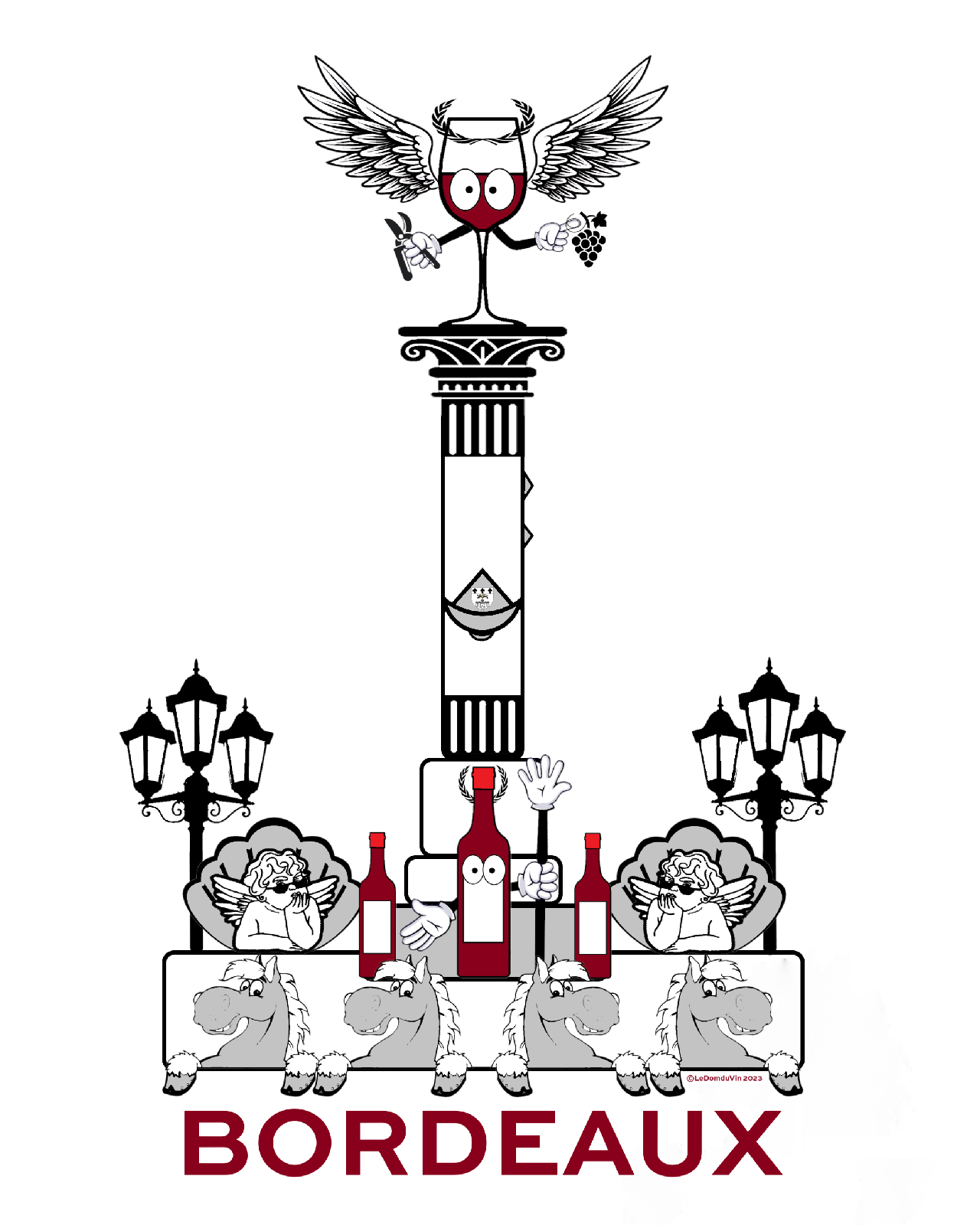
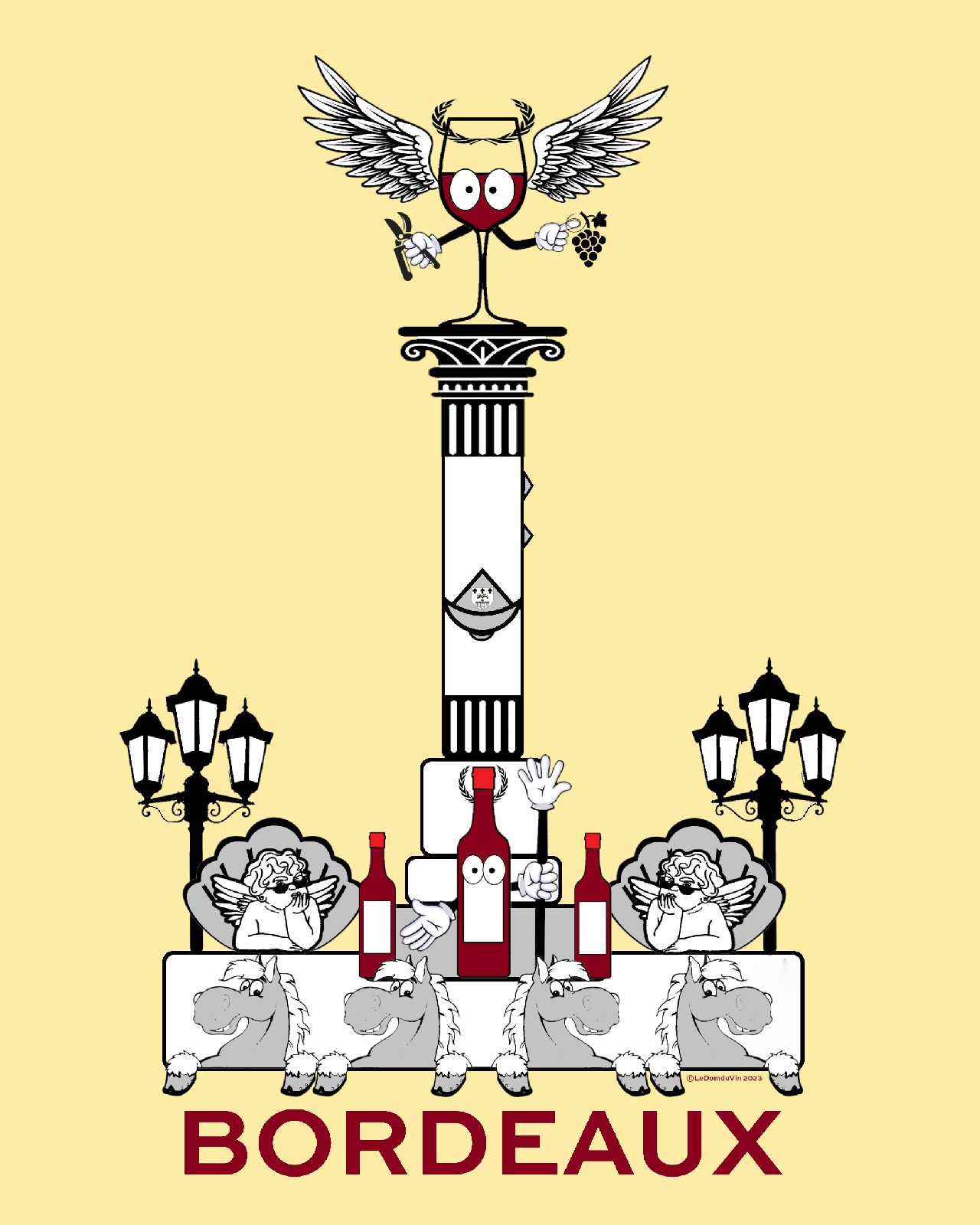
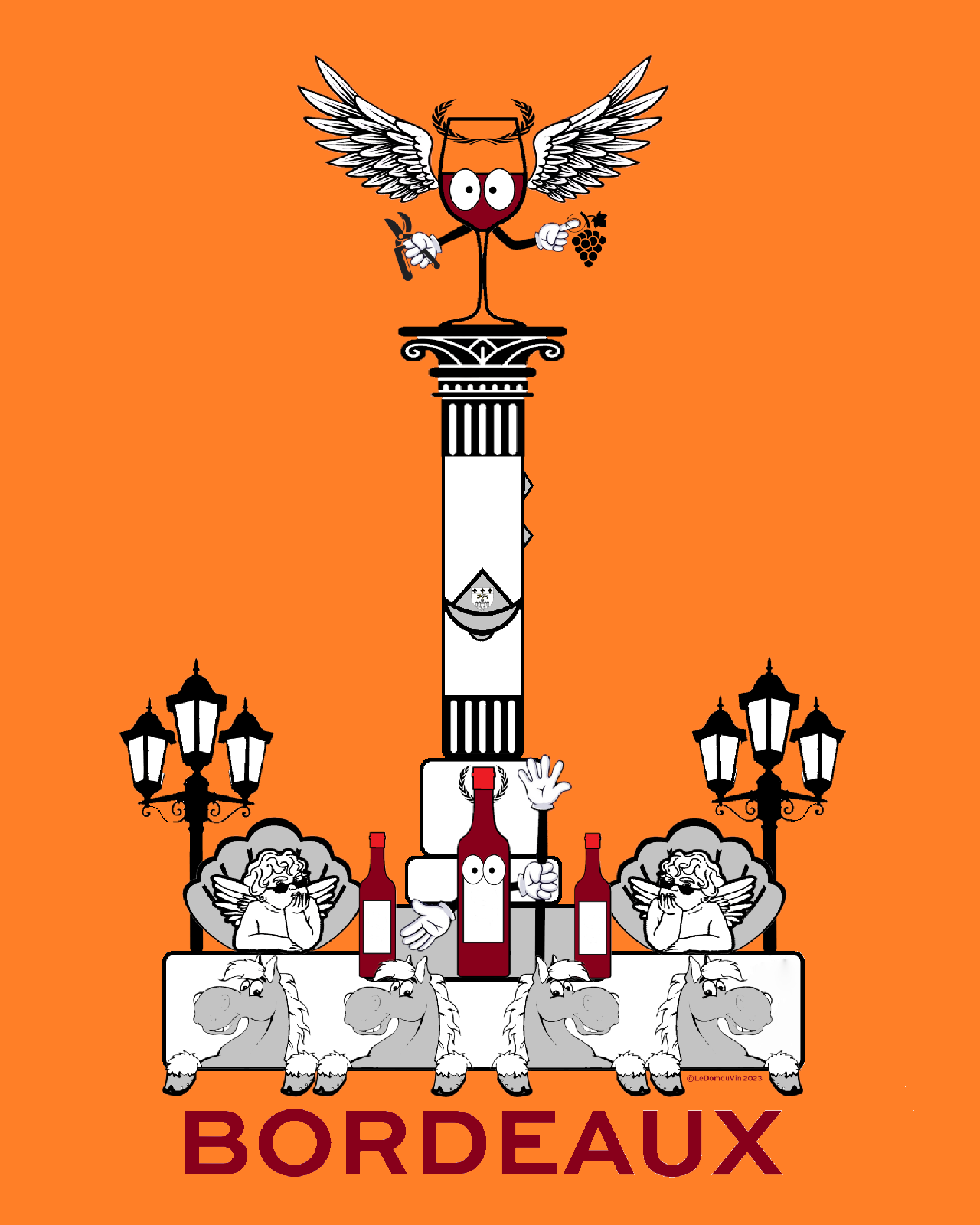
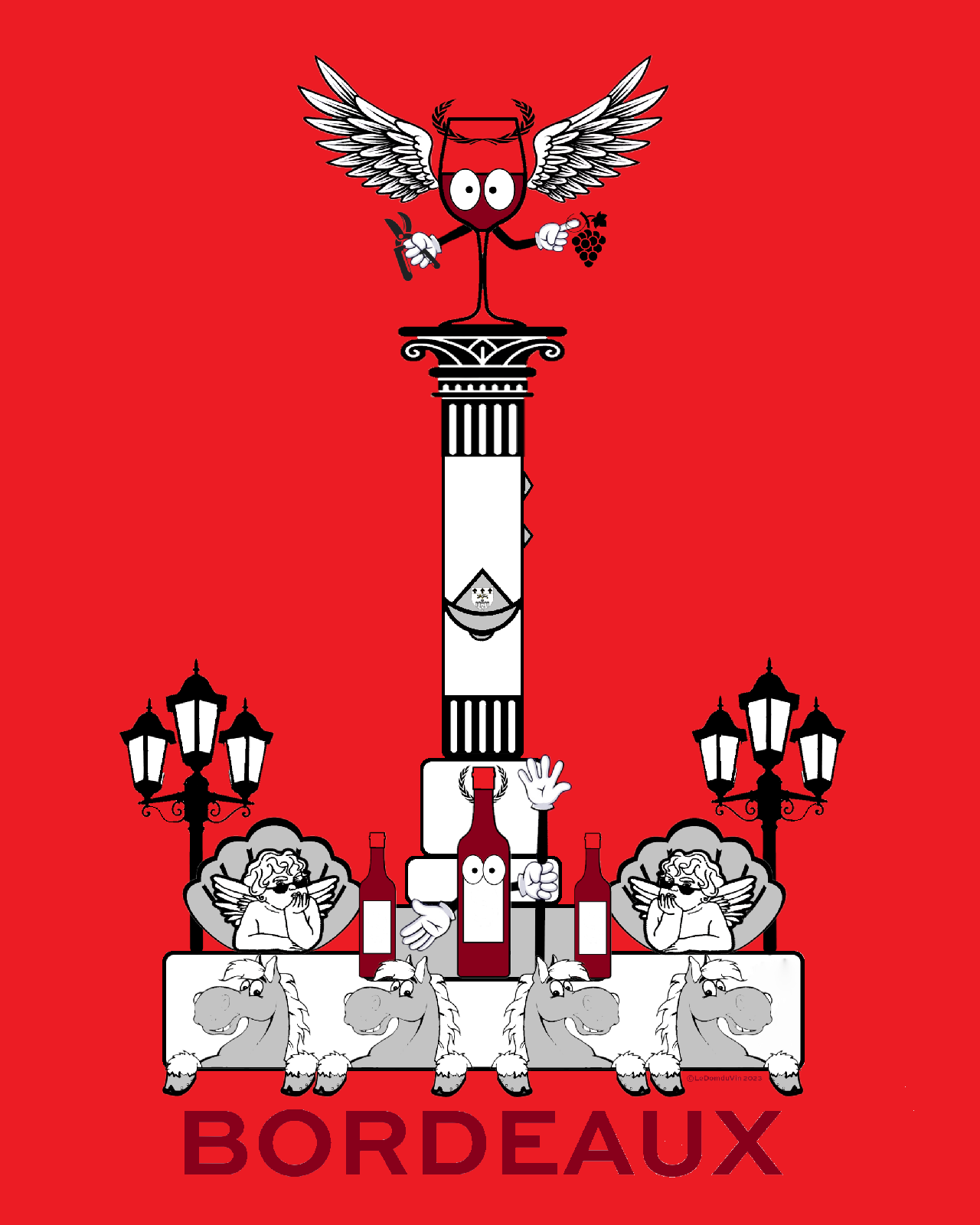
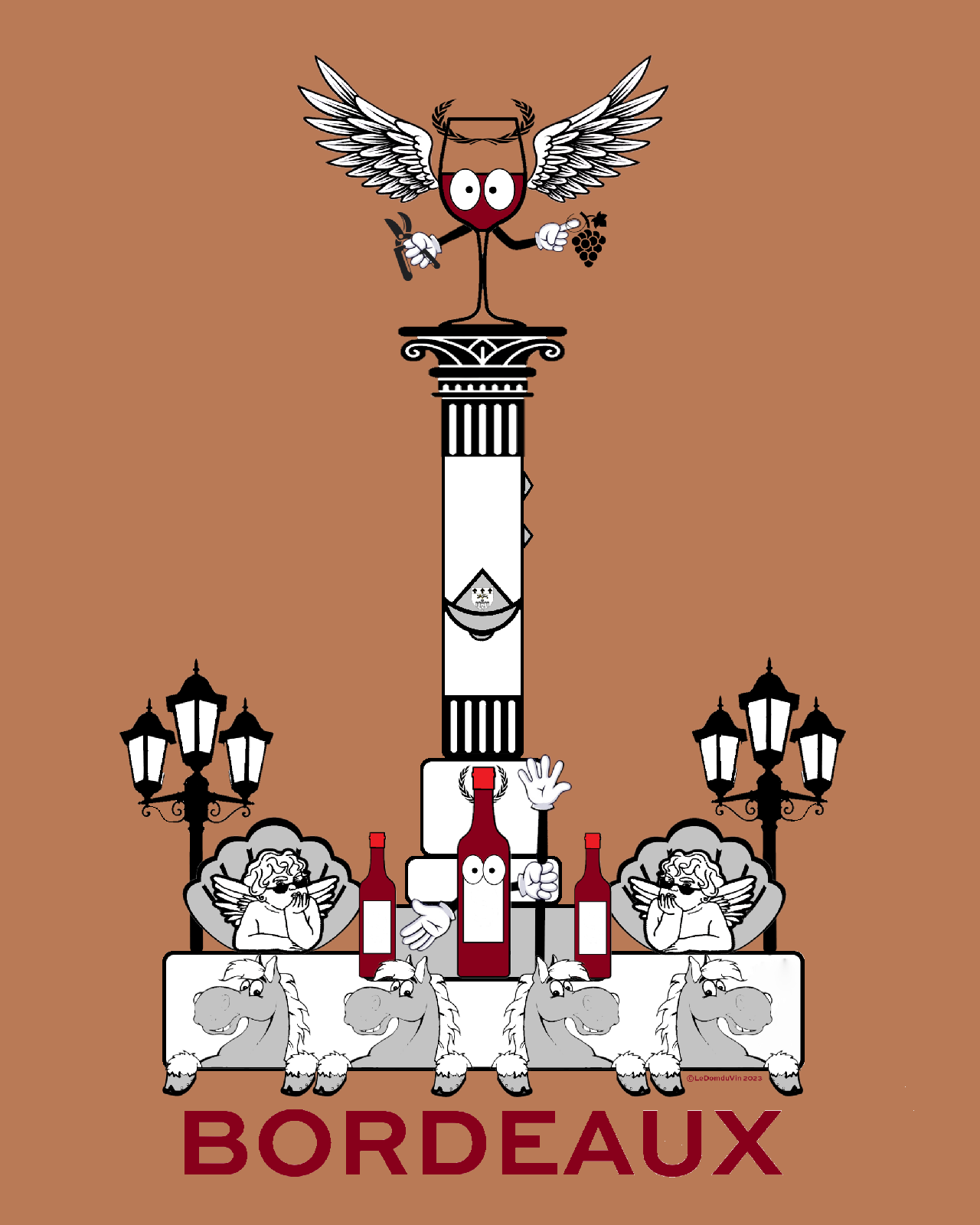
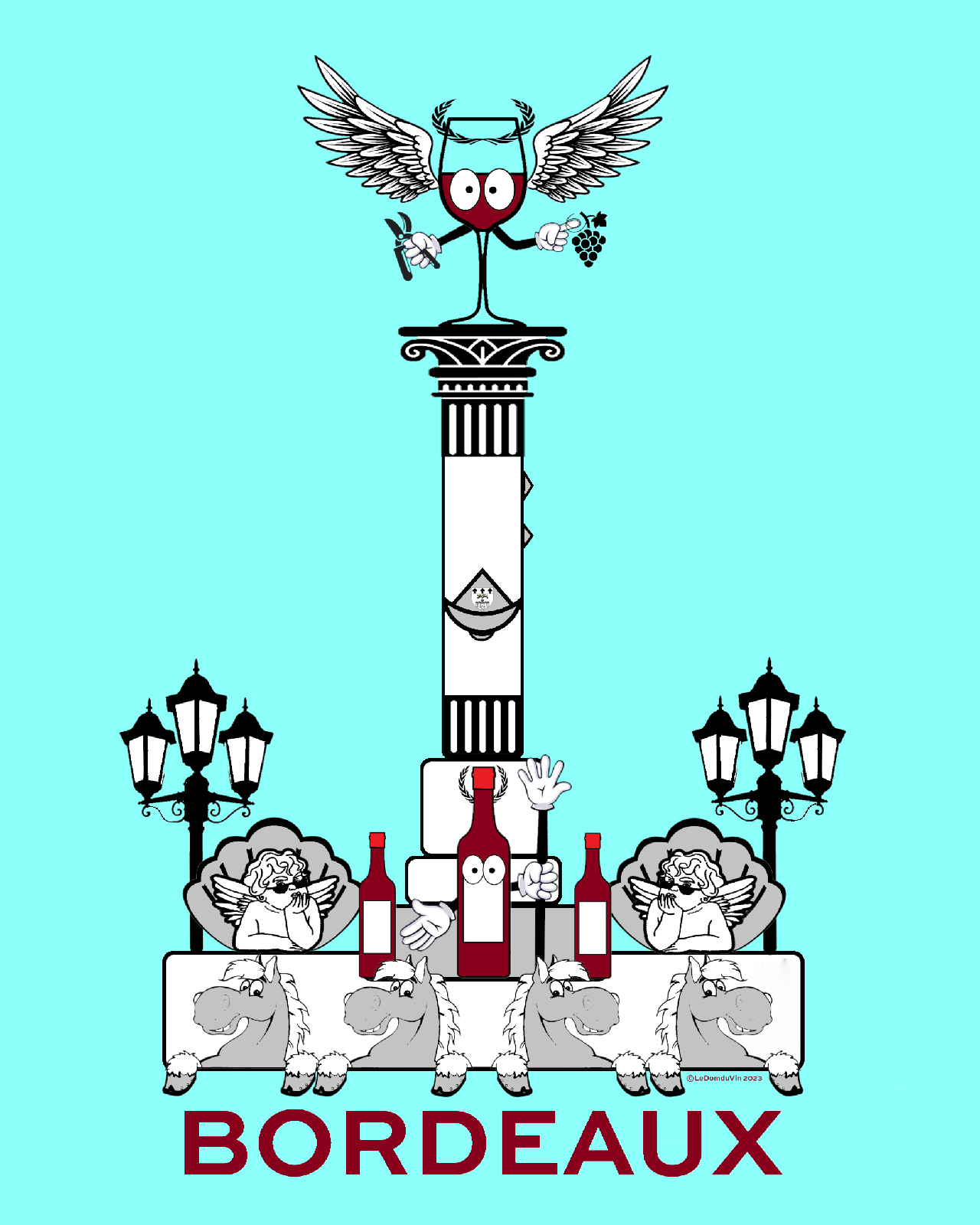
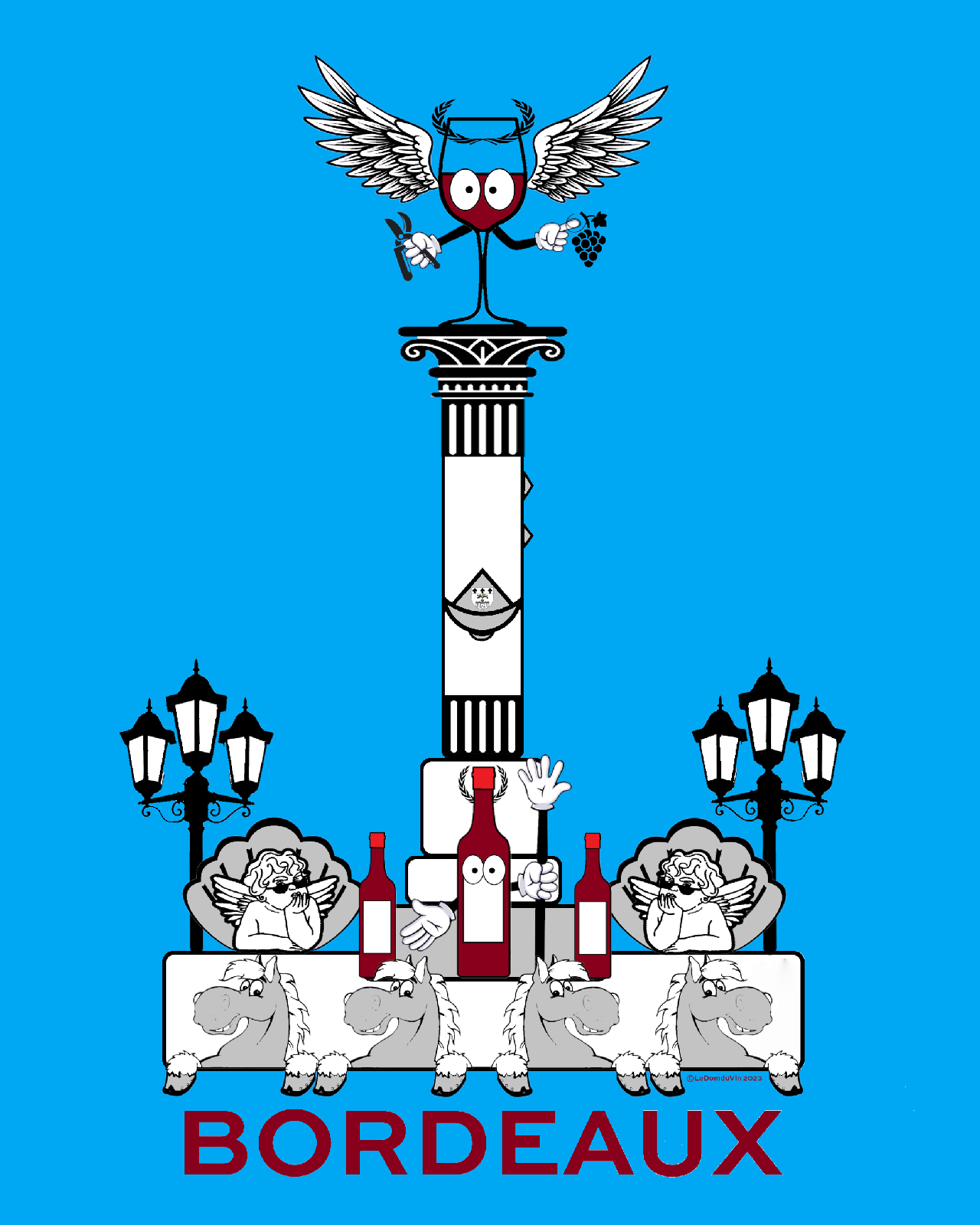
"Le Monument aux Girondins" 


revisited by @ledomduvin 2023

"Le monument aux Girondins" is an emblematic monument of my home town, Bordeaux, partly designed by the architect Deverin and erected between 1894 and 1902 on the "Place des Quinquonces". 

I couldn't help but revisit it with  "bottle" and "glass", the two protagonists of most of my drawings and collages on my blog and social media. 

I did the white version first, but I thought it could use some colour, so I did seven more versions of it with different colours. 


(Maybe I should try to do some NFT?😁👍🍷)

I like the orange, brown, dark blue and grey versions. 

Which one do you like or prefer? 

Let me know in the comments. 

Cheers! Santé! 

Dom

@ledomduvin #ledomduvin #lescreationsadom #lesimagesadom #lescollagesadom #lesillustrationsadom #lesdessinsadom #vin #wine #vino #wein #bordeaux #lemonumentauxgirondins


Unless stated otherwise, all right reserved ©LeDomduVin 2023, on all the contents above including, but not limited to, photos, pictures, drawings, illustrations, collages, visuals, maps, memes, posts, texts, writings, quotes, notes, tasting notes, descriptions, wine descriptions, definitions, recipes, graphs, tables, and even music and video (when and where applicable).

Thursday, May 4, 2023

LeDomduVin: Star Wines - May the 4th be with You - Yoda


Star Wines - May the 4th be with you

YODA


Over the last 5 decades, May the 4th (fourth) has inspired countless visual and written parodies and memes of the famous Star Wars phrase "May the force be with you", said by Obi-Wan Kenobi to Luke Skywalker in Star Wars Episode IV: A New Hope.

And, since 1978 or 1979 (depending on the sources), "May the 4th" has officially been named "Star Wars Day".

As a huge fan of Star Wars, it has inspired me for years to create one or more illustrations to celebrate the day.

In the past few years, based on the franchise's famous characters, I have created:

OBI-WINE KENOBI - (representing young Obi-Wan Kenobi - Ewan McGregor)

MACE WINEDU (representing Mace Windu - Samuel L. Jackson)

THE PADAWINE (representing a young female Padawan)

So I had to create another one with Yoda. And here it is.

Cheers! Santé!

And may the force be with you always!
And the wine, too 😉👍🍷

Dom

NB: check my previous posts on May 4th to see the other illustrations I created, like this one here

#maythe4thbewithyou #maythe4th #maytheforcebewithyou #maythewinebewithyou #yoda #starwars #starwines #starwarsandwine #wine #vin #vino #wein #lesmemesadom #lescreationsadom #lesimagesadom #lesillustrationsadom #lescollagesadom #ledomduvin @ledomduvin ©ledomduvin 2023


Unless stated otherwise, all right reserved ©LeDomduVin 2023, on all the contents above including, but not limited to, photos, pictures, drawings, illustrations, visuals, maps, memes, posts, texts, writings, quotes, notes, tasting notes, descriptions, wine descriptions, definitions, recipes, graphs, tables, and even music and video (when and where applicable).

Friday, April 28, 2023

LeDomduVin: Black Silver & Gold Bordeaux Labels


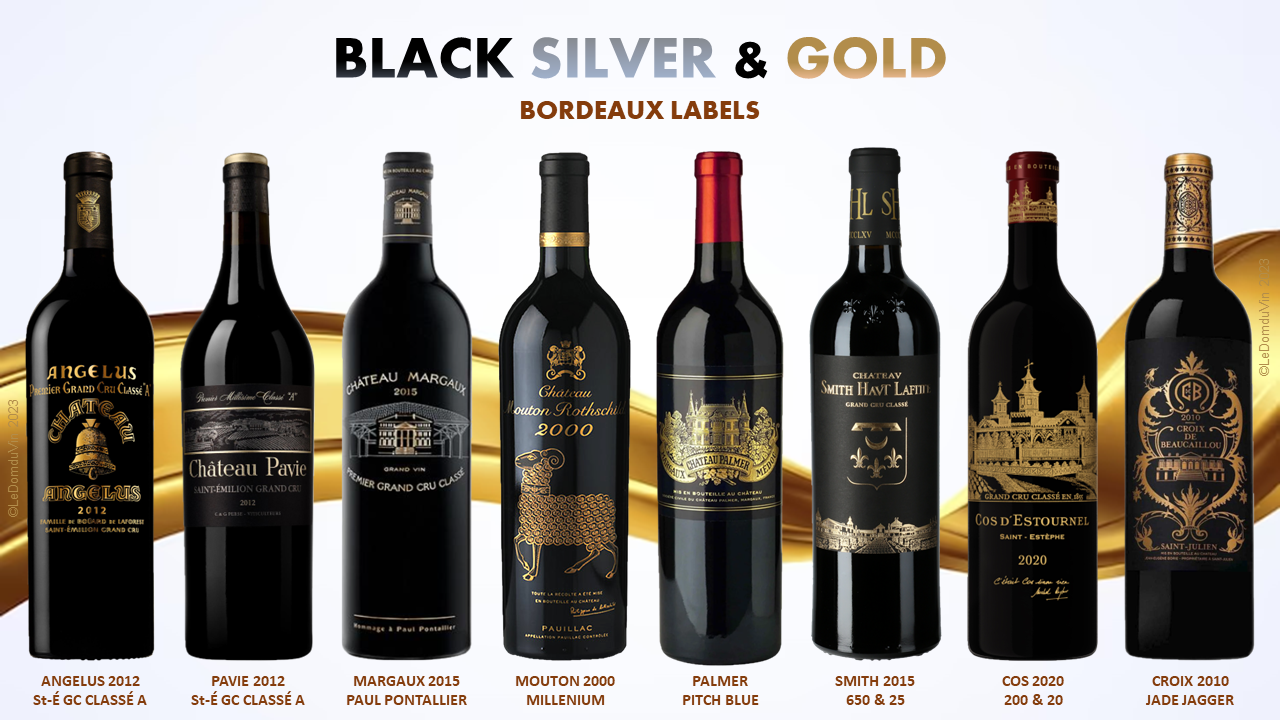
Black Silver & Gold Bordeaux Labels 


While some Chateaux in Bordeaux, like Mouton Rothschild, are known for altering parts of their labels each year, most Bordeaux labels and bottles have remained relatively unchanged for over 40 years. And, despite the recent trend towards minimalistic or modern designs, most Chateaux labels have maintained a consistent visual aspect. 

As I wrote in one of my recent posts (read it here), among the most illustrious, the label of Chateau Lafite Rothschild is an excellent example as it has only ever-so-slightly evolved. 

Resisting change is a trait recognizable in most Classified Growths, on both left and right banks, long established and anchored in the aristocratic Bordeaux attitude, culture, and traditions, with a dash of Dutch demeanour and British phlegm. 

Chateau Palmer is another great example of consistency, boasting the absolute "pitch blue" label (NB: it is not black; it is called "Palmer Blue" and is also the colour of perfectly ripened grapes) since 1869 (apparently). 

And yet, the past two decades have witnessed some chateaux making bold decisions to modify or create a different label either to revamp them or to commemorate significant events linked with the history of the Chateaux or the owners, allowing their bottles to stand out from the ocean of other Bordeaux wines proudly.  

In my opinion, the dark ("pitch blue") and gold label of Chateau Palmer is the quintessential definition of sophistication, class, elegance and refinement, with a "je ne sais quoi" of, if not royal, at least, aristocratic flair. 

Globally, black, silver and gold have always been symbols of elegance, refinement and luxury. 

Black is a matte colour emanating a sophisticated, elegant, classy, powerful, mysterious, timeless aura. 

Silver is a refined and distinguished colour. As a noble metal, often the symbol of wealth and success throughout history, it represents brilliance, grace, innovation, refinement, sophistication, and glamour. 

Gold is the colour of wealth and luxury, particularly when paired with black. It is a precious, revered, coveted metal, often linked with love, wisdom, and magic. 

No wonder other chateaux have used these colours to mark the importance and significance of certain vintages.  

The examples presented in my collage and below are just a few of the many Bordeaux wine labels that share similar characteristics. These examples showcase some of the most outstanding and complex Black, Silver & Gold Labels that Bordeaux has to offer.

Nice lineup, isn't it? 


Yet, before explaining these labels briefly, let's step back with a little "aparté" about...


Some Bordeaux history (+ personal views and opinions)    


Bordeaux Grands Crus Classés are known for their adherence to longstanding aristocratic codes, values, culture, and traditions that have developed over the past two centuries. This is especially true when it comes to the classification of their wines.

Live in Bordeaux for a little while, visit the Chateaux and talk with the people, and you'll realize how difficult it is to break the old codes and habits and shake things a little in the world's wine capital. 

Declared a UNESCO World Heritage site in 2007, Bordeaux (and its surrounding Chateaux) looks resplendent in its 18th-century grandeur and splendour. Yet some Chateaux owners' mentality and attitude have not changed much since the "Siecle des Lumières". Bordeaux is still ruled by the money and power of long-established families and traditions.    

For the 1855 "Exposition Universelle de Paris", Emperor Napoleon III requested a classification system for the best Bordeaux wines that would be presented at the exposition for the world to see. To do so, wine brokers and merchants established a list and ranked the wines according to the château's reputation and trading price, directly related to quality at that time. 

Only 3 minor changes have occurred ever since. The addition of Chateau Cantemerle, as a Fifth Growth, in 1856. The rank elevation of Château Mouton Rothschild from second-growth to first-growth, in 1973, after decades of intense lobbying by its owner Philippe de Rothschild. And the removal of Château Dubignon, a third-growth from Margaux that was absorbed into Château Malescot St. Exupéry.

Understandably, over the last nearly 170 years, the reputation, trading price and, more importantly, the quality of some of these Chateaux have significantly changed as ownership and history underwent dramatic changes, notably during and in between WWI and WWII, then more noticeably after the wars. 

Starting in the 50s, the 3rd industrial revolution saw the rapid progress of technology, machinery and innovation, moving from mechanical and analogue electronics to digital electronics. Yet, it also started the prominent use of plastics and chemicals in the 70S and GMOs in the 80s, which have increased exponentially, considerably affecting the vineyard's soils, subsoils and environment, and consequently, the wines.     

Also, during the 60s and 70s, the focus was on mass production instead of prioritizing quality. Technics used in the vineyards and cellars led to numerous experiences and methods, good and bad, some now long abandoned, some that have lasted or evolved for the better, and some not. 

Despite the changes happening in the wine industry at that time, both the chateaux that embraced them and those that held on to traditional methods failed to improve their approach to winemaking. The former increased production and the use of chemicals, while the latter resisted change, resulting in wines of lower quality on both sides. 

Apart from a few exceptions, like 1961 and 1964, and 1975, most Bordeaux wines from the 60s and especially the 70s were mediocre to really bad (**).   

In the 80s and 90s, vineyards and cellars underwent significant changes (both good and bad). Chemicals continued to be heavily used to protect vineyards from pests and diseases. Wine critics and flying winemakers emerged during this period, along with the implementation of 100-point ratings, like those used in the US. As a result, Bordeaux began making wines that catered to the American palate, and those with high ratings became subject to price speculation.

Starting in the early 2000s, there was a renewed interest in winemaking practices that were more natural and sustainable, such as "Lutte Raisonnée", "Biologique" (Organic), and Biodynamic. These methods aimed to create better quality wines while also considering the environment. However, some individuals remained resistant to change and continued to cling to outdated and polluting methods.

In the last 10-15 years, the Bordeaux bashing, the rise of Burgundy, the power of social media and the ever-increasing competition from the rest of the world have significantly influenced Bordeaux growers and chateaux owners to change their methods, adopt more natural processes, pay more attention to how they interact with the environment and nature in general, and more importantly increase the quality of their wines.     

In recent years, open-minded and innovative growers, owners, and new generations have played an important role in renovating their brands, wines, bottles, and labels. They have adapted to new methods of approaching their customers, improving both the image of Bordeaux and theirs at the same time. This has been achieved by concentrating on quality, marketing, and interactive oenotourism activities to attract new customers.

Over the past 20-25 years, the quality of Bordeaux wine has greatly improved thanks to advancements in technology, machinery, science, methodology and knowledge. Undoubtedly, climate change and pollution have also played a significant role in this improvement. To maintain the quality of their vines, owners and winemakers have had to devote more time to the vineyards to prevent weather hazards such as frost, hail, heat, drought, and flood. Additionally, they have reduced or eliminated the use of chemicals in favour of more natural methods and products, paying closer attention to the environment.  

And despite those who remain with a foot in the past, reluctant to change and adapt, overall, mentalities are changing in Bordeaux, and great improvements have been made, recently inspired by small groups of alternative owners and winemakers such as  "Bordeaux Pirate" and "All you need is wine". 

Bordeaux is known for offering some of the best quality-price ratios, and it's been said that making bad wines there is almost impossible now. 

On that note, it's important to remember that Bordeaux is not limited to the Top 300 most renowned and expensive Chateaux, which only make up about 4% of the 7500 Chateaux and vineyards.

There are around 9000 wines produced in Bordeaux, including a vast amount of small Chateaux for under 15 Euros (or USD16.5) that are delicious and definitely worth trying. These wines provide excellent value compared to other wines in the same price range from around the world.


Now, if we only focus on the classified growth, the same situation occurs. Some owners and winemakers are still locked in the old days and Bordeaux's "traditional" style. Yet, some have made drastic changes and tremendously improved. Surpassing the "expected" quality of their rank and thus rivalling or outpassing their higher-ranked and more expensive neighbours. Questioning the credibility of the classification. Is the 1855 classification still representative of the Chateau's reputation, quality and price?   

The "En Primeurs" tasting provides a unique opportunity to discern the disparities in quality between neighbouring Chateaux that share the same rank, appellation, and/or similar prices. Despite my annual anticipation that I'll be amazed by some changes and improvements, I'm consistently let down as I come to the realization that the winemakers who consistently produce lesser wines in good years and bad years remain unchanged.

Meaning that every year, prior to going to the "En Primeurs" tasting, I reset the button of my "preconceived notions" to free my mind from any biased thoughts, hoping to finally be surprised by the new wine of the Chateaux I previously had less interest in due to the lesser quality of their wine. And unfortunately, it never fails! The good ones are good to great. And the bad ones are mediocre to bad, as usual... disappointing, especially when you know the price some of these Chateaux ask for.  

I'm not the only one to say it or think that way. Thus, it is not "just" my palate or my opinion. 

Proving that the bad ones have not changed or even improved over the years. Demonstrating the veracity of the fact that they are still stuck in the past, making a supposedly "traditional" style of Bordeaux (usually dusty, dry, tight, tannic, austere, underripe or overripe, often unbalanced and inhomogeneous) that has not evolved for decades and only exists to satisfy an ageing crowd of amateurs and nostalgics.  

I find it surprising that despite receiving negative feedback and low scores from experts, journalists, and critics over the years, some winemakers still refuse to make improvements. They argue that their wine's taste is a product of their terroir, traditions, methods, and vision, even if it falls short of its potential. 

From their perspective, understandably, they are content with their wine's quality, but is it worth its high price?

While writing these lines, many examples come to my mind, but I will not cite anyone or further detail my opinions on the subject, as tasting is very subjective. Yet, some of you will understand what I'm trying to say.     

To sum up, while Chateaux owners and winemakers insist on producing top-notch wines that align with their status and classification, it's perplexing to note that some Chateaux continue to charge exorbitant prices based on their rank, even though their wines are of inferior quality compared to lower-ranked wines that are better in quality and less expensive. 


For all the reasons cited above and after decades of countless debates about whether to review the 1855 Classification, you would think that the Bordelais would have opted for a revision like they did with the appellation of St. Emilion, where the Classification is reviewed every ten years. 

But NO! The 1855 Classification is immutable and set in stone forever. All attempts at change were a failure so as not to hurt anyone's ego and to avoid pointing fingers or saying out loud what many are thinking in a whisper. 

Ultimately, it is undoubtedly better if the 1855 Classification remains untouched, especially when you see the "fiasco" of the recent revisions in other appellations like Saint-Emilion and all the problems this has caused.

Bordeaux is a world where the establishment, family names, traditions and money hold power and determine what is considered socially acceptable. It is a place where people often appear friendly in public but may betray each other privately. This environment fosters a strong, often unhealthy sense of competition and exacerbates jealousy (typically French), especially observable in lesser vintages.

Fortunately, most of the top-tier Chateaux in Bordeaux make excellent wines, which balance things out in each appellation. And fortunately for the Bordelais, each decade, they benefit from about 5-6 good to great vintages (**) to fall back on their feet, save their image and justify their attitudes and ever-increasing prices.

Yet, who am I to judge? After all, everything about tasting and liking wine is so subjective that it is difficult to be objective or rational.  

...

The topic has been ongoing for decades and is way too long to be discussed in only one post. So I will stop here for now. 

Regular followers know I am not ranting or venting. I'm just a very "vocal" and opinionated French-American man who likes to freely express his opinions and discuss topics others tend to avoid. 😇😁👍🍷

However, let's move on, as once again, I digressed from the main topic (one of my many recurring bad habits 😅). 


Where were we? Ah, yes, I was about to talk about the Classification of Saint-Emilion and the first 2 labels on the left of my collage above.  


The rollercoaster of the Classification of Saint-Emilion 


As described above, once established, Classifications are difficult to revise. And any attempt at revision or update usually generates controversy, debate and complaints. 

Despite what seemed to be a fair vote, the recent classifications of Saint-Emilion proved that it can be biased when parts of the jury are Chateaux owners who might have a personal interest in seeing their Chateaux promoted. And like for any other votes or listing establishment, there are always people to disagree with and contest it, especially if their chateaux get demoted.  

Many articles have been written on the subject at the time, so I won't extend much on it. Yet, for those of you who may not have followed what happened, here is a brief résumé: 

The classification of Saint-Emilion wines was first thought of in 1930, but it remained an idea until 1954, when the INAO agreed to handle the list. It was first published on June 16, 1955, and was amended on August 7 and October 18, 1958. 

Following the initial classification, which included 12 Premier Grands crus classés and 63 Grands crus classés, the list was updated in 1969, 1986, 1996, 2006, and 2012. "However, the 2006 classification was declared invalid following a series of legal actions. The 1996 version of the classification has been reinstated for the vintages from 2006 to 2009." - Wikipedia 

To prevent the situation of the 2006 Classification, the INAO decided that the 2012 Classification would be done by an independent group of people with no involvement in St.-Emilion Wine Syndicate and the Bordeaux wine trade. But instead, wine professionals from Burgundy, the Rhône Valley, Champagne, the Loire Valley, and Provence made up a seven-person commission.

However, despite a different method and new handling, complaints and disagreement for the 2012 classification proved inevitable, leading to an even worst situation for the 2022 Classification. Three out of four of the Chateaux Classés "A" (the two original ones, Chateau Ausone and Chateau Cheval Blanc, and one of the two promoted in 2012, Chateau Angelus) withdrew their application for the 2022 ranking.  

Although each of the 3 chateaux acted individually, without consulting one another, their reasons for withdrawing from the 2022 classification were very similar, with Chateau Cheval Blanc stating in a letter sent to Bordeaux Negociants and courtiers "a profound change in the philosophy of the classification, especially regarding new criteria that amount to “marketing drift”, such as the importance of product placement, how often an estate appears in media, including PR and in social media, along with wine tourism infrastructure."

It is understandable that being judged on their "Social Media" and "Oenotourism" impact, rather than their respective terroir, viticulture, and the quality and ability to age of their wines, based on an "evaluation system" not taking into consideration the "notion of identity and typicity, as if the culture of wine, its ageing capacity over several decades, and knowledge of the appellation were unnecessary for evaluating the estates", does not seem to be either fair, reasonable, right or just.  

It better explains why the 1855 classification has never (and probably will never be) touched.  

....   


Ok, I think that, once again, I got carried away with my thoughts and opinions. I have been writing way too much for what was supposed to be a short post. 

So, let's jump into the labels.   


The Black, Silver & Gold Labels


After decades of reign on the Rank "B" of the Classification, Chateau Angelus and Chateau Pavie were promoted to Grand Cru Classé "A" status in the 2012 Classification of St. Emilion wines, joining Chateau Ausone and Chateau Cheval Blanc.   


Chateau Angelus 2012


In 2012, Chateau Angélus achieved significant milestones, including being elevated to Premier Grand Cru Classé "A" status and welcoming a new member of the family's eighth generation to the estate's Directorate.

Additionally, it marked the 230th anniversary of the Boüard de Laforest family's arrival in Saint-Emilion. The estate underwent extensive expansion and improvement work, creating a level of quality that had never been seen before. A unique bottle was designed to commemorate the historic vintage, featuring the family crest on the capsule and an engraved gold inscription and embellishments highlighting the iconic Angélus bell.


Chateau Pavie 2012 


Chateau Pavie commemorated its upgrade from "B" to "A" classification for the 2012 vintage by showcasing a fresh black label embellished with gold print. 

In 2013, while working at a property in Pomerol (*) (that the company I worked for back then had recently acquired), I received an invitation from Chateau Pavie to attend their dinner celebrating their new status as "Saint-Emilion Grand Cru Classé A". The dinner was held in a spacious room above their newly built cellar, which offered a stunning view of their vineyards. The attendees included "Le Gratin Bordelais", negociants, courtiers, owners, winemakers, and other distinguished guests. The dinner was exceptional, with delicious food and exquisite wines, and it concluded with a spectacular firework display. The event was organized by Chantal and Gerard Perse, proud owners of Chateau Pavie. It was a beautiful evening to remember.

It's worth noting that in the 2022 Saint-Emilion Classification, Chateau Pavie maintained its "A" status, while Chateau Figeac was promoted from "B" to "A". Interestingly, Pavie is the only one out of the four Chateau Grand Cru Classe A in 2012 that remained in the 2022 classification.


Chateau Margaux 2015


Château Margaux released its 2015 vintage in a limited edition bottle to commemorate Paul Pontallier, who served as the Managing Director of the estate for more than 20 years.

Paul Pontalier joined Margaux in 1983 and became the Managing Director in 1990. In partnership with the estate owner, he is credited for significantly improving the wine and the estate throughout his career. Unfortunately, he passed away in March 2016, one week before the "En Primeur" week began for the highly acclaimed 2015 vintage.

The bottle has been engraved with a unique design of the estate with surrounding texts in gold and a representation of the "Nouveau Chai" (New Cellar) in Silver in the background. It is the first time Chateau Margaux has commissioned a one-of-a-kind design for the label of its grand vin. 

Corinne Mentzelopoulos, the owner of Chateau Margaux, created this bottle to honour and pay tribute to Pontallier while also celebrating the 200th anniversary of Chateaux Margaux and the "Nouveau Chai" that was commissioned in 2009 and completed in 2015.

In the early 19th century, La Colonilla, owner of the Chateau at the time, approached Louis Combes, a fashionable Bordeaux architect, to build the Chateau and the farm buildings we admire today. Combes realised the masterpiece of his life. Often nicknamed the “Versailles of the Médoc”, Chateau Margaux is a work of art and a rare example of the neo-palladian style in France. Constructions started in 1810 and were completed in 1815.  


Chateau Mouton Rothschild 2000
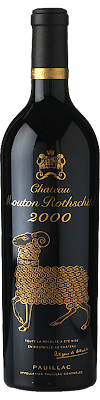


Chateau Mouton Rothschild is notorious for commissioning leading artists and painters to illustrate each vintage the label of its Grand Vin. It all started when the cubistic painter "Carlu" was asked to design the 1924 label, to commemorate the first vintage bottled exclusively at the château.

The label design underwent several small changes until 1945 when Baron Philippe de Rothschild commissioned Philippe Jullian to create a new illustration for the label. It featured a "V", symbolizing the Allied victory and the end of World War II.

For the vintage 2000, Baroness Philippine de Rothschild did not commission a painter. Instead, she found a glass manufacturer, B.S.N., able to engrave the bottle with a new technique of enamelling in relief.

The bottle boasts a shining gold and enamel representation of the "Augsburg Ram", a chased silver-gilt silver vessel created around 1590 by German master goldsmith Jacob Schenauer, part of the collection displayed at the Museum of "Wine in Art" at the Chateau.

This beautifully engraved bottle, specifically created to celebrate the new millennium (and the new century), instantly became a collector item. As proof of authenticity, the Château Mouton Rothschild's name is engraved in the base.


Chateau Palmer 


Chateau Palmer's label is so classy and distinguished that I would not be surprised if it has inspired the other Chateaux mentioned in this post to use the Black, Silver and Gold colours for their one-off label designs.  

Even though the label for this particular Chateaux wasn't designed to honour any specific historical event related to either the estate or its owners, I decided to include it on this list. This is because the "Pitch Blue" colour used on their label, also known as "Palmer Blue", dates back to 1869, making it probably the first Bordeaux estates to use a combination of Dark, Silver, and Gold colours.


Chateau Smith Haut Lafite 2015


In 1990, Florence and Daniel Cathiard fell in love with Chateau Smith Haut Lafitte. They restored it and brought it back to its splendour to perpetuate its tradition of excellence. After 3 years of renovating the estate, they moved into the 18th-century Chartreuse, and the rest is history. 

For the 2015 vintage, the Cathiards designed a special label and capsule, displaying writings and logos and a chateau representation embossed in Silver and Gold on black to commemorate their 25th harvest and the 650th anniversary of Chateau Smith Haut Lafitte. This chateau has been around since 1365, making it a truly historic landmark

Both their whites and red wines constantly receive accolades and good scores from the critics, the press and the professionals. The restaurant, hotel and spa, conveniently located at the Chateau, form a haven of peace and are highly recommended.    

Their two daughters followed their parent's steps creating businesses to further enhance the reputation of the Chateau and extend its image throughout the country and even the world.  

Alice Tourbier-Cathiard and her husband, Jérôme, run two hotel facilities, "Les Sources de Caudalie", a luxury hotel in the middle of the vines at Chateau Smith Haut Lafitte, and "Les Sources de Cheverny" in the Loire Valley.

Mathilde Thomas-Cathiard and her husband, Bertrand, founded the "Caudalie" company, which creates and sells exclusive beauty care products from grape seeds and vine cuttings worldwide.


Chateau Cos d'Estournel 2020


Displaying an Indian-inspired architecture nuanced with oriental style and pagodas guarded by elephants, Chateau Cos d'Estournel magnificently thrones atop its hill like a majestic Indian palace. This creates a singularity amongst the common 17-19th architectural style of most Chateaux and houses in Bordeaux, hard to be missed when you leave Pauillac to enter Saint-Estephe.     

In 1811, Louis Gaspard d'Estournel purchased a few hectares of vineyards near a hill called "Cos", meaning "hill of pebbles" in Gascon. He then travelled worldwide to promote his wines, including the East Indies, where the maharajas were fond of them, earning him the nickname "Maharajah of Saint-Estèphe". The construction of the Château began in 1830, featuring unique Indian/Far East-inspired architecture, including pagodas and elephant statues.

In 2000, entrepreneur Michel Reybier bought the estate from Domaine Prats. Numerous technical upgrades have been implemented in the vineyard and the cellar since to consistently strive for greater excellence and precision.

The 2020 vintage marks two significant milestones - the 200th anniversary of Cos's existence and the 20th anniversary of Michel Reybier's ownership. The bottle has been given a stunning makeover to commemorate this special occasion. The black bottle now showcases a beautiful gold engraving of the chateau and lettering, making it truly exceptional.


Chateau Ducru Beaucaillou - Croix de Beaucaillou 2010


La Croix de Beaucaillou is the second wine of Chateau Ducru-Beaucaillou. Typically, a second wine is produced using young vines and grapes unsuitable for the "Grand Vin". However, since 2005, Croix de Beaucaillou has been made using its own vines from parcels of Ducru-Beaucaillou vineyards. As a result, it has become more of a second label than a second wine.

Ducru's owner Bruno Borie wanted to change the perception that second wines are inferior and only bought by people who can't afford the first wines. To achieve this, he asked British jewellery designer Jade Jagger (Mick Jagger's daughter) to create a new label for Croix de Beaucaillou, making it a second label rather than a second wine, distinguishing it from the grand vin.

Initially released as a limited edition for the 2009 vintage, the new black and gold label became a permanent feature starting from the 2010 vintage. It's worth noting that the label's design changed slightly in 2015 and was completely redesigned in 2018.


A 3rd label called "La Croix Ducru-Beaucaillou Cuvée Colbert", also featuring a black and gold/copper design, was produced each vintage from 2013 to 2019.


As a bonus, I wanted to mention two more Chateaux that I couldn't fit in my collage due to limited space but are still noteworthy for this post on Black, Silver & Gold Bordeaux Labels.


Chateau Talbot 2018


Désiré Cordier acquired Château Talbot, a highly esteemed winery in Saint-Julien, in 1918. For the 2018 vintage, the Bignon-Cordier family, who continue to manage the estate, commemorated the 100th anniversary by releasing a unique black bottle screen-printed with Silver design and lettering for the entire production in 75 cl.

NB: The other formats (half-bottles, magnums, double magnums, etc.) had a particular label reflecting the aesthetics of the 75-cl bottle.

The main barrel cellar at Talbot is an impressive display of technical and aesthetic expertise, featuring sturdy concrete pillars that resemble a forest opening up to the sky. Symbolizing the vines, trees, and roots embedded in the terroir, Nancy Bignon-Cordier chose these pillars to commemorate her family's 100th vintage at Talbot.

Elegant and distinguished, the label is faithful to the profile of the great wines of Château Talbot.


Chateau Sociandot Mallet 2018


Jean Gautreau, born in April 1927 in the small town of Lesparre in the Medoc, was not from a family involved in the wine industry. He worked for the brokerage firm of Miailhe until 1950, when he became an independent broker. Recognizing the rising cost of Bordeaux wines as an opportunity to create a profitable business, he established his own négociant firm in January 1957.


In 1969, Jean Gautreau came across Sociando-Mallet in Saint-Seurin-de-Cadourne while searching for a wine estate to purchase for a Belgian client. Despite the property's poor condition, Jean was enamoured with it from the start due to its exceptional terroir and stunning view of the Gironde Estuary. He ultimately decided to buy it for himself.

At that time, there were only 5 hectares of vineyards. Additionally, the buildings needed repairs and improvements, and there was no barrel cellar, just a small vat room and garage. Fortunately, with guidance from Gérard Cler, a former employee at the château, Jean Gautreau was able to produce an acceptable first vintage, a superb second one, and many better ones after that.

Over time, Jean Gautreau purchased vines from his neighbours to expand his vineyard. He took steps to ensure top-notch quality by updating the estate's buildings, constructing a barrel cellar, and gradually improving the choice of grape varieties, matching the appropriate ones to each vineyard plot.

Today, Château Sociando-Mallet is a property of 83 hectares that produces almost 450,000 bottles yearly, including its second wine, Demoiselle de Sociando-Mallet. Its owner, Jean Gautreau, sold his négociant business in 2000 and now concentrates solely on managing the wine estate.

Sociando-Mallet 2018 is a tribute to Jean Gautreau, who took over the property 50 years ago and elevated it to its current quality and fame. The wine features a one-off black label, with silver and gold design and lettering, dedicated to Gautreau, a visionary who created a unique identity for this highly estimated property, which is "neither cru bourgeois, nor classified growth."


Voilà! That's all, folks! 

Stay tuned for more posts, and in the meantime, take good care of yourself and your loved ones.  

Cheers! Santé! 

Dom 


(*) Back in 2013, I was sent for 5 months in France with one of my directors to oversee the transition of ownership of Chateau Le Bon Pasteur, recently acquired by the company I worked for at the time.  

(**) If interested, you can read my post on my "Theory of the decades for Bordeaux vintages" part 1 here and part 2 here ).  


Collage by @ledomduvin 2023 

#bordeaux #wine #vin #vino #wein #label #labels #black #silver #gold #ledomduvin @ledomduvin #lescollagesadom #lescreationsadom #bordeauxlabels


Unless stated otherwise, all right reserved ©LeDomduVin 2023, on all the contents above including, but not limited to, photos, pictures, drawings, illustrations, visuals, maps, memes, posts, texts, writings, quotes, notes, tasting notes, descriptions, wine descriptions, definitions, recipes, graphs, tables, and even music and video (when and where applicable).