Showing posts with label #ruinart. Show all posts

Sunday, August 31, 2025

LeDomduVin: Subtle Power


Subtle power 


I recently selected and served these wines for a private dinner, and I hadn't tasted them in a while. I was expecting them to be rich and exuberant, but in the end, their strength lay in their subtlety. 


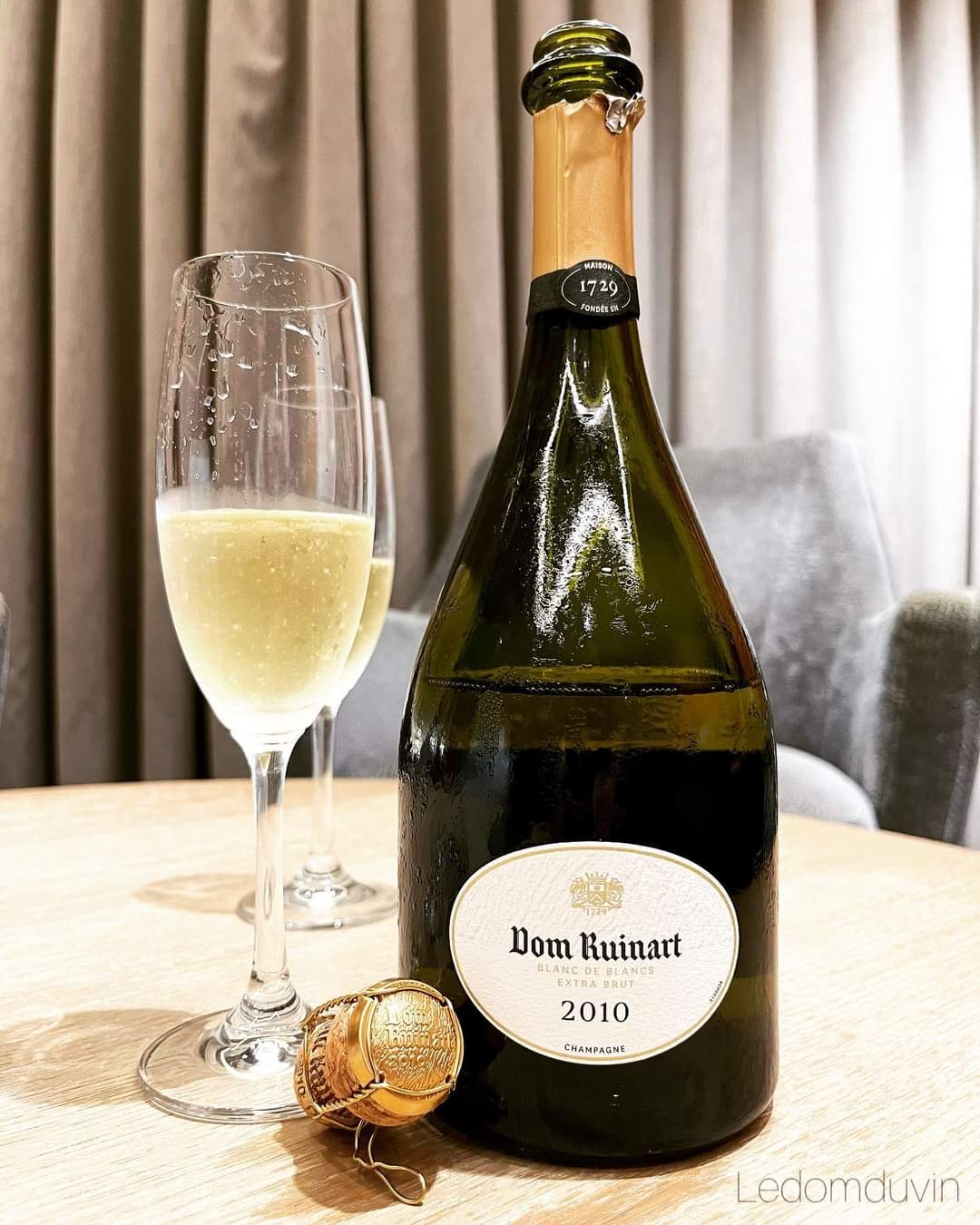
Dom Ruinart Champagne Blanc de Blancs Extra Brut 2010


Dom Ruinart exclusively selects Chardonnay from primarily Grand Cru sites. 90% of the Chardonnay grapes are sourced from the Côte des Blancs (including Le Mesnil-sur-Oger, Avize, Chouilly, and Cramant), planted in the Côte’s famous white, calcareous chalky soil where it excels, benefiting from an easterly exposure. The remaining 10% comes from the north-facing Montagne de Reims, specifically from Maison Ruinart's historic vineyard, located in the Grand Cru areas of the village of Sillery.

Dom Ruinart 2010 represents a significant milestone. In its pursuit of excellence, Maison Ruinart extended the wine's aging process to reveal additional layers of flavor. For this cuvée, the oenological team decided to reintroduce cork during aging, confirming its benefits through years of tastings. After at least 9 years ageing on its lees, it is notable that the cork has imparted a woody character to this vintage, in addition to the aromas of grilled almonds and coffee on the nose and palate. Extra Brut with a dosage of 4 g/L.  

Beyond its pale yellow gold color, the nose is aromatic and fresh, offering aromas of yellow and stone fruits mingling with floral, mineral, toasted, and nutty notes. Overall, the palate is generous, ample, and layered, lingering somewhat, although not as long as I would have liked; yet the finish is fresh and elegant, elevated by a subtle bitterness. As it is neither too heavy nor too light, it is a good champagne to bring to any occasion, ideal as an aperitif with appetizers. A real quaffer!    


Domaine Bitouzet-Prieur Meursault 1er Cru Perrieres 2020


Vincent Bitouzet’s family history in Burgundy spans the last two centuries, with the Bitouzets among the earliest families in the area to bottle their own wines. Vincent’s grandfather received awards for his winemaking in 1860. When Vincent married Annie Prieur, they merged parts of their family estates to establish a renowned domaine. Now, their son Francois Bitouzet, Vincent and Annie’s son, is actively collaborating with his parents.

Based in Volnay, with significant holdings in Meursault, the domaine covers 12 hectares, roughly four of which are planted with Chardonnay, and the remaining eight with Pinot Noir. They practice organic viticulture, and the harvest is manually done. Classic Burgundian winemaking methods are used, using only indigenous yeasts.

The Bitouzet-Prieur family owns just over a quarter-hectare of Chardonnay, planted in 1983, in the lower part of this renowned premier cru "Les Perrières Dessous," located right above "Les Charmes" on the slope. The Meursault-Perrières is probably the most dazzling mineral wine in their collection. While it can be closed when young, it gradually opens up into a stunning white Burgundy with layered complexity. 

I was unsure what to expect from this wine, as it was my first time trying it.  I previously tried other wines from Bitouzet-Prieur, but never this particular one. I'm not sure why I always want to say "Bizoutet" ("Bizouter" is a slang in French that means "kissing" or "giving kisses", which would be a nice and funny name) instead of "Bitouzet". 

However, I was pleasantly surprised, as instead of being a powerhouse of creamy butter, popcorn, and toasted oak flavors, as some Meursault can be (those that are more New World-style than the New World Chardonnays themselves), this wine is all about subtlety, refinement, and elegance. The oak treatment is present but barely noticeable, as only about 25-30% new oak is used during its 16-month aging process, making it significantly more palatable and enjoyable than those using 100% new oak.  

At first, I misinterpreted its subtlety and elegance as a lack of body and weight. I wanted more from it, more fruit, more substance, more backbone. However, it then began to reveal itself after a few seconds. I tasted it again, and then it hit me. It was beautiful and charming. Fresh, light, and elegant yet complex and layered, it was like a ballerina, showcasing power, balance, precision, and sophistication in a subtle and graceful manner. If timid, the nose is fresh and mineral, with aromas of yellow fruits and citrus, combined with a gentle hint of buttery, toasted oak and herbal nuances. The palate is soft, silky, elegant, and refined, gently expanding towards the long, fresh, and mineral finish. Loved it!                   


Drouhin-Laroze Chapelle-Chambertin Grand Cru 2016


Domaine Drouhin-Laroze has been a family-owned estate for over 150 years, featuring numerous prestigious appellations in the top-tier Premier Cru and Grand Cru categories, which showcases a rich heritage. Today, Philippe and Christine Drouhin, along with their children, manage the estate.

Drouhin-Laroze's Chapelle-Chambertin Grand Cru comes from an east-facing plot at 260 meters elevation, where the vines were planted in 1973 and 1986. The monks of Bèze established a chapel at that location in 1155. It was reconstructed in 1457 before eventually being destroyed, and it is the origin of the name of the appellation.

Those who follow me for a while know that I'm a huge fan of wines with "Chambertin" in the name. Why? The wines of Gevrey-Chambertin, from the village wines to the Premier Crus and Grands Crus, are some of the most versatile wines of all Burgundy. For a Sommelier like me, they are the easiest to pair with. And this Chapelle-Chambertin from Drouhin Laroze confirmed this rule. 

The 2016 Chapelle-Chambertin Grand Cru features approximately 30% whole-bunch fruit, which adds complexity, texture, and structure. Right after opening, the nose displays fresh aromas of ripe red cherries and berries, mingling with floral, mineral, oaky, and earthy notes, reminiscent of a forest floor, but springier than autumnal. Light to medium-bodied, the palate remains quite subtle and could have benefited from a bit more volume and substance. And yet, it is clean, focused, refined, elegant, and sophisticated in its subtlety, with a finely textured and structured palate that is well-balanced between fruit and acidity, and a silky mouthfeel and fine tannins, all culminating in a lingering mineral earthy finish. Loved it.  


Chateau Lynch-Bages Pauillac Bordeaux 2005


Château Lynch-Bages, situated at the entrance to Pauillac, is a notable estate that has significantly influenced the history of the Médoc wine region. The terroir surrounding the area and the old village of Bages has been recognized since the 16th century, but it achieved broader fame in the 18th century.

According to "The Wine Insider," the Dejean family sold the property in 1728 to Pierre Drouillard. In 1749, Drouillard passed the estate to his daughter, Elizabeth, who was married to Thomas Lynch. That’s how the estate became part of the Lynch family, where it remained for seventy-five years and later on inspired the name "Lynch Bages". (*)

In the 1930s, Jean-Charles Cazes, already managing Les Ormes de Pez in St. Estèphe, took on a lease for Lynch Bages' vineyards. The Cazes family had a long legacy in Bordeaux dating back to the late 1800s. Jean-Charles Cazes later bought both estates just before World War II. Since then, Lynch Bages and Les-Ormes-de-Pez have remained under the Cazes family's management. (*)

Jean-Michel Cazes, who started as an engineer in Paris, entered the wine industry and began managing the estate in 1973. Soon after, he modernized every aspect of Lynch Bages. Jean-Michel Cazes met more people, traveled more often, and promoted his wines worldwide like no other Château owner. Lynch Bages is now one of the most popular and beloved brands in Bordeaux wine, thanks to Jean Michel Cazes's relentless efforts. It’s interesting to note that Jean-Michel Cazes was one of the first château owners to start promoting their wine in China in 1986. (*)

In June 1989, Lynch Bages inaugurated its new winemaking facilities, perfectly timed to celebrate one of the finest vintages they've ever produced. That same year also saw the opening of the Cordeillan-Bages hotel and restaurant. A few years afterward, the renovated Village de Bages, featuring various shops, was established.(*)

In 2006, Jean-Michel's son, also named Jean-Charles Cazes, became the managing director of Château Lynch-Bages. Jean-Michel Cazes continued to lead the family's wine and tourism division. Thanks to ongoing promotion in the Asian market, Château Lynch-Bages remains one of the strongest brands in the region, especially in China.(*)

A benchmark among fine Pauillac wines and one of the most recognizable Bordeaux labels, especially in the US and Asia, Château Lynch-Bages boasts over 90 hectares of vineyard rooted in the region's characteristic Garonne and lower Gironde estuary gravel soil. The hand-picked grapes are initially sorted in the vineyard and then usually aged for 15 months in about 80% new oak barrels.

A blend of 72% Cabernet Sauvignon, 15% Merlot, 12% Cabernet Franc, and 1% Petit Verdot, Lynch-Bages benefited from the notoriously warm, sunny, and dry 2005 vintage. The lower yields, caused by dry conditions and water stress, limited production but improved ripening quality, resulting in high-quality grapes. 

The 2005 Lynch-Bages is very seductive and aromatic on both the nose and the palate. In the glass, the color is deep ruby with a slightly brownish hue. On the nose, it boasts a melange of dark berries, cassis, cedar, graphite, and forest floor aromas, with floral notes (such as violet) and earthy undertones. The palate is unexpectedly soft and gentle, medium-bodied and silky, with present yet fine and well-integrated, ripe tannins that add both texture and structure. It has enough acidity to keep it fresh and lively, and is balanced with the ripeness of the fruit, leading to a long, persistent, and delicious earthy finish. Loved it! 

And, once again, being a Pauillac spawned from the 2005 vintage, I was waiting for a bigger wine with more volume and weight, and yet its strength lay in its subtlety.  Well done!     


These are four elegant, refined, stylish wines with a soft expression and a subtle power. 

Cheers! Santé! 

Dom


@ledomduvin #ledomduvin #wine #vin #vino #wein @ruinart #ruinart #domruinart #champagne @bitouzetprieur #bitouzetprieur #meursault #burgundy @domainedrouhinlaroze #drouhinlaroze #chapellechambertin #burgundy @chateaulynchbages #lynchbages #pauillac #bordeaux #tastingnotes #sommelier #sommelierlife #sommlife #ilovemyjob #lovewine #wineyearly


Unless stated otherwise, all rights reserved ©LeDomduVin 2025, on all the contents above including, but not limited to, photos, pictures, drawings, illustrations, collages, visuals, maps, memes, posts, texts, writings, quotes, notes, tasting notes, descriptions, wine descriptions, definitions, recipes, graphs, tables, and even music and video (when and where applicable).

Wednesday, January 22, 2025

LeDomduVin: When you like Champagne - A brief post about its History, Origins, and Evolution


When you like Champagne 😋👍🍾🥂 


A brief post about its History, Origins, and Evolution 


Champagne is more than just a sparkling drink; it symbolizes celebration, luxury, and tradition. Originating from the eponymous region in France, this sparkling wine has a rich and fascinating history dating back centuries. From its humble beginnings to its status as an iconic drink, champagne has undergone a remarkable evolution, marked by technical innovations, cultural changes, and global recognition.


History & Origins


The history of champagne begins in the Champagne region of northeastern France. The Romans planted the first vines there, and wine was still produced for centuries until the 17th century, when champagne, as we know it today, began to take shape.

The Benedictine monk Dom Pérignon (1638 - 1715), often credited with the invention of champagne, played a crucial role in developing the methode champenoise, which involves causing a second fermentation in the bottle to create the characteristic bubbles.

Yet, historically, the earliest documented sparkling wine is Blanquette de Limoux, created by Benedictine monks at the Abbey of Saint-Hilaire, near Carcassonne, in 1531. Creating it by sealing the wine in bottles before the completion of its first fermentation.

Over a century later, in England, scientist and physician Christopher Merret documented the process of adding sugar to a finished wine, thus initiating a second fermentation (six years before Dom Pérignon arrived at the Abbey of Hautvillers).

In 1662, Merret presented a paper at the Royal Society outlining what is now known as ‘méthode traditionnelle’ (also known as Methode Champenoise). His findings coincided with advancements by English glassmakers, who developed bottles sturdy enough to handle the internal pressures of secondary fermentation. In contrast, French glassmakers could not produce bottles of comparable strength or quality then.

In France, the first sparkling champagne was created by accident, as the pressure in the bottles led to explosions or corks popping off, earning it the nickname "the devil's wine" (le vin du diable). At the time, bubbles were seen as a defect.

Adolphe Jaquesson developed the muselet in 1844 to prevent corks from flying out. Early versions were challenging to apply and remove.

For a long time, even when champagne was intentionally made sparkling, it was produced using the 'méthode rurale,’ which involved bottled wine before the fermentation was completed. The 'méthode champenoise' (or traditional method), which involves secondary fermentation in the bottle, was not adopted until the 19th century, roughly 200 years after Merret recorded the technique.

In the 18th century, champagne gained popularity among French and European nobility, becoming a symbol of luxury and refinement. Champagne houses, such as Moët & Chandon, Veuve Clicquot, and Louis Roederer, were founded during this period and helped establish the standards of quality and production that we still can see and taste today.


Development of Champagne over the Last 30 Years


Over the past three decades, champagne production and consumption have significantly transformed. Technological advances have improved winemaking methods, ensuring consistent quality and more efficient production. Champagne producers have also adopted more sustainable winemaking practices, meeting a growing demand for environmentally friendly products.

Champagne gradually lost its reputation as reserved only for the elite, the rich, and the famous. It became more approachable and appreciated by the masses and younger generations. The emergence of younger and lesser-known independent producers also helped to open and democratize the Champagne market.

On a commercial level, champagne has seen its market extend well beyond French and European borders. Exports have increased significantly in the US and other countries, with emerging markets such as China, India, and Brazil becoming significant consumers. This global expansion increased the awareness of Champagne and introduced new consumption trends, such as 'Special Cuvées,' rosé, and vintage champagnes.

At the same time, the Champagne region has evolved, with new appellations, investments, and initiatives aimed at protecting and promoting wine heritage. Tourists worldwide flock to the area to discover the vineyards, cellars, and champagne houses, contributing to the local economy and the international reputation of champagne.


The State of Champagne Sales and Future Prospects


Over the past decade, despite the diminution of wine sales in general since COVID-19, the champagne market has experienced significant fluctuations, reflecting both global economic challenges and changes in consumer behavior. Champagne sales were marked by sustained growth in certain regions, notably Asia and North America, while traditional markets such as Europe showed signs of stabilization.


Effects and Consequences on the Current Market


As mentioned above, the last ten years have seen a diversification of consumer markets, with a notable increase in exports to emerging countries. This expansion increased champagne awareness and introduced new consumption trends, such as 'Special Cuvées,' rosé, and vintage champagnes. Champagne producers have had to adapt to these new demands by innovating both in terms of production and marketing.

However, the past decade has also been marked by economic challenges, including the 2020 global health crisis, which temporarily affected sales and production. Restrictions on gatherings and events have limited occasions for drinking champagne, traditionally associated with celebrations and festive moments. Despite these obstacles, the sector has shown remarkable resilience, with a rapid recovery in sales as soon as restrictions were lifted.

Yet, COVID-19 confinement obliged a large number of people to work from home, leading to an increase in alcohol consumption. As a result, anti-alcohol campaigns rapidly exploded globally, denouncing the effects and consequences of alcohol consumption and abuse. Although these campaigns originally aimed at hard alcohol (spirits like whisky, gin, vodka, etc.) and beers, they quickly spread to all alcoholic beverages, including wine and, thus, Champagne, greatly affecting sales and consumption in the last five years.  

Global warming has also changed the Champagne and bubbly wine market. Producers now create sparkling wines in areas, regions, and even countries where this was not considered plausible less than a decade or two ago.         

Overproduction is also a concern. With more small and independent producers crafting sparkling wine worldwide and lesser sales and consumption, competition for brand, quality, and price is fierce. 

So what does it mean for Champagne in tomorrow's market? 


Perspectives for the Market of Tomorrow


Despite fierce competition and overproduction of sparkling wines, the champagne market still looks promising for the future thanks to its name (Champagne can only be produced in France), quality, and reputation. 

Current trends indicate a growing demand for high-quality products and unique experiences. Consumers, who are increasingly aware of environmental issues, are looking for sustainably produced champagne, pushing champagne houses to adopt environmentally friendly viticultural practices, improve their quality, and adapt to the new markets to maintain their sales.  

Technological innovations will continue to be crucial in improving production methods and ensuring quality. Advances in winemaking and vineyard management will allow champagne to meet growing demand while maintaining its renowned high standards.

Additionally, the rise of e-commerce and direct sales platforms provides new opportunities to reach consumers worldwide. Champagne houses are investing increasingly in digital marketing and online sales strategies to reach a larger and more diverse audience.


To Conclude


In conclusion, although the last decade has presented many challenges (COVID-19, anti-alcohol campaigns, overproduction, and global warming opening new areas of production for sparkling wines, along with a general decrease in consumption, especially among younger generations facing financial difficulties and disinterest in alcoholic products), the champagne market seems to remain dynamic and full of potential. The adaptations and innovations implemented by producers position champagne as a beverage of choice for many years to come (hopefully), promising to continue celebrating special moments and delighting palates around the world.


**************

I could have continued discussing this vast subject for hours and write about it in more detail. Still, I did not want to bore you with the specifics, as the world we live in is already in a sad state, with war, violence, famine, economic, financial, political, geopolitical, and religious issues, problems, and concerns. Therefore, I kept this post as positive as I could. 

Even if the past three years have been extremely difficult for the wine industry globally, for all the reasons cited above and beyond, as a Champagne and Wine lover, I firmly believe that Champagne (and wine in general) still has a future.

As for everything else, time will tell. 

So, for now, let's just enjoy a glass (or two) of Champagne!


Jacques Selosse Initial Blanc de Blancs Grand Cru Brut


Compared to its siblings with lower production, ‘Initial’ is one of Jacques Selosse's most accessible cuvées, with 33000 bottles produced. It is made from vineyards planted on the lower part of the slopes of Avize, Cramant, and Oger. Its complexity results from the clay-rich soils, which have higher yields than the vineyards that produce ‘Version Originale’ (V. O.).

This beautiful non-vintage champagne Blanc de Blancs Grand Cru, crafted with 100% Chardonnay grapes and disgorged in 2021, is a delight for your taste buds. Beyond its pale yellow color and fine bubbles, it displays aromas of pear, dried fruits, and lemon, with lightly toasted notes of bread and almonds. Medium to full-bodied, it's rich, complex, layered, focused, and fresh, with bright acidity and a long, lingering finish. Love it.


Dom Perignon Plenitude 2 Brut 2003


Dom Pérignon Plénitude 2 (P2) 2003 is a perfect example of climate change. It reflects this Champagne house's dedication to embracing risks. It may never have existed without cautious, bold decisions based on adaptation, flexibility, expertise, and experience, especially while facing such an unprecedented hot vintage.

As a reminder, the sudden and brutal heat wave of 2003 was recorded as the hottest summer in Europe since at least the 16th century. France was hit especially hard. It led to health crises in several countries, and the death toll across Europe was estimated at more than 70,000 people.

Combined with subsequent drought, the heat wave created a crop shortfall in parts of Southern Europe, including vines. The predominant heat was recorded in July and August, partly due to the Western European seasonal lag from the maritime influence of the Atlantic warm waters combined with hot continental air and strong southerly winds. (*)

Following a harsh, dry winter, severe frosts in early April 2003 led to considerable losses. Then, temperatures soared in late May, culminating in extraordinary highs. This was followed by a heat wave that delivered the Champagne region's hottest summer in fifty-three years and the driest in a decade. Due to the heat accelerating the ripening process and reducing grape yield, harvesting surprisingly commenced on August 21.

As a result of this heat wave, Dom Perignon Plenitude 2 2003 is a bold and fleshy champagne that reflects the ripeness of the vintage combined with enough freshness to keep it balanced and harmonious. It presents a slightly advanced golden color. The nose offers floral and limey aromas at first, evolving into riper, sweeter, lemony, candied yellow, and stone fruits. Thanks to early harvest to preserve the acidity and prevent overripeness, the palate is fresh with flavors like those on the nose, with more pronounced lemon and yellow fruits mingling with peppery, spicy, and floral notes. The taste, texture, and structure are somewhat atypical for Dom Plenitude 2 as it behaves like a wave, characterized by ups and downs: starting by unfolding a fruity attack, the mid-palate develops in an ample and coating way before retreating into a more restrained verticality leading to a slightly bitter, savory finish.

It's not bad, but definitely not as good as the amazing 2002 vintage. And yet, you’ve got to give it some credit for even existing, knowing the difficulties of the vintage.


Dom Ruinart Blanc de Blancs Extra Brut Millesime 2010


Dom Ruinart exclusively selects Chardonnay from primarily Grand Cru sites. 90% of the Chardonnay grapes are sourced from the Côte des Blancs (including Le Mesnil-sur-Oger, Avize, Chouilly, and Cramant), planted in the Cote’s famous white, calcareous chalky soil where it excels, benefiting from an easterly exposure. The remaining 10% comes from the north-facing Montagne de Reims, specifically from Maison Ruinart's historic vineyard located in the grand cru areas of the village of Sillery.

Dom Ruinart 2010 represents a significant milestone. In its pursuit of excellence, Maison Ruinart opted to extend the wine's aging process to unveil additional layers of flavor. For this cuvée, the oenological team decided to reintroduce cork during aging, confirming its benefits through years of tastings. After 10 years of maturation, it is interesting that the cork has imparted a woody character to this vintage, in addition to the grilled almonds and coffee aromas on the nose and palate. The palate is aromatic and fresh, rich and layered, even if not as long as I would have loved it to be.


To be fair, Dom Ruinart should have been served first, followed by Selosse Initial, which is more complex and elegant, and Dom Perignon P2, which is the boldest despite lacking substance in the finish.


Yet, no matter what, I love champagne, no matter in which order it is served.

That’s all, folks, for today!

Cheers! Santé!

Dom


@ledomduvin #ledomduvin #wine #vin #vino #wein #champagne @domainejacquesselosse #jacquesselosse @domperignonofficial #domperignon #domperignonp2 @ruinart #ruinart #sommelier #sommelierlife #sommlife #ilovemyjob #lovewine #wineyearly


Unless stated otherwise, all rights reserved ©LeDomduVin 2025, on all the contents above including, but not limited to, photos, pictures, drawings, illustrations, collages, visuals, maps, memes, posts, texts, writings, quotes, notes, tasting notes, descriptions, wine descriptions, definitions, recipes, graphs, tables, and even music and video (when and where applicable).

Thursday, March 7, 2024

LeDomduVin: Food & Wine tasting


Food & Wine tasting for an upcoming event at Rosewood, Hong Kong 


Ruinart Champagne Blanc de Blancs NV

Light, refreshing, and zesty, it has delicate aromas of green apple and citrus fruit, white flowers, and notes of freshly baked bread. A quaffable champagne, perfect as an aperitif and with the scallops.  


Cloudy Bay Sauvignon Blanc 2023

Cloudy Bay is a classic for BBQs and garden or beach parties. It is mass-produced, with over 100,000 cases annually, and is known for its mass appeal and consistency. At first glance, I did not think it was the right choice for this event, yet I was pleasantly surprised. It was nice, fresh, zesty, mineral, well-balanced, and harmonious, with a lively acidity and a mouth-watering palate. It paired well with the food of the first few dishes (Scallops, Risotto, Cauliflower, and fish). 


Joseph Phelps Cabernet Sauvignon Napa Valley 2021

I had not tried this wine for a few years and thought it might overpower the food, especially this young. Yet, it proved me wrong. A blend of 92% Cabernet Sauvignon, 4% Petit Verdot, 2% Cabernet Franc, 1% Merlot, and 1% Malbec, the 2021 Napa Valley Cabernet Sauvignon is a medium to full-bodied, opulent, and layered wine with rich aromas of ripe black currant, tobacco, leather, and hints of dark chocolate. The palate is smooth, well-structured, and textured, with good balance, acidity, depth, and length. Despite its youth and aging potential, it is incredibly approachable now. Love it.   


Cheers! Santé!

Dom


@ledomduvin #ledomduvin #wine #vin #vino #wein @ruinart #ruinart #champagne @cloudybay #cloudybay #sauvignonblanc @josephelps #josephphelps #cabernetsauvignon #foodandwine #tasting #tastinglunch #sommelier #sommelierlife #sommlife #ilovemyjob #wineyearly


Unless stated otherwise, all rights reserved ©LeDomduVin 2024, on all the contents above including, but not limited to, photos, pictures, drawings, illustrations, collages, visuals, maps, memes, posts, texts, writings, quotes, notes, tasting notes, descriptions, wine descriptions, definitions, recipes, graphs, tables, and even music and video (when and where applicable).

Wednesday, July 5, 2023

LeDomduVin: Dom Ruinart 2010


Dom Ruinart 2010


Tasted a few days ago during a meeting with the distributor, I really enjoyed this champagne.

Beyond its attractive pale golden color and its fine pearling bubbles, it boasted timid white and yellow fruit aromas with mineral and buttery nuances. The palate was generous, ample, round, and coated, with just enough texture and acidity to keep it balanced and focused. Easy to drink and friendly. Nice!

Yet, I prefer my champagne to be more polished and sophisticated, crisper (freshness/acidity), with a thinner, more refined "mousse." The "mousse" appeared a bit fat for my palate, and it lacked a "je-ne-sais-quoi" of character and personality for me to really love it. Nevertheless, it was still really enjoyable, and the bottle did not last long, which is a good sign. 😁👍🥂🍾

Cheers! Santé!

Dom

@ledomduvin #ledomduvin #lesphotosadom #vin #wine #vino #wein #champagne @ruinart #ruinart #domruinart


Unless stated otherwise, all right reserved ©LeDomduVin 2023, on all the contents above including, but not limited to, photos, pictures, drawings, illustrations, collages, visuals, maps, memes, posts, texts, writings, quotes, notes, tasting notes, descriptions, wine descriptions, definitions, recipes, graphs, tables, and even music and video (when and where applicable).