Showing posts with label #petrus. Show all posts

Monday, September 29, 2025

LeDomduVin: Occasional Exceptional Wines!


Occasional Exceptional Wines!


I recently opened, prepared, and served these succulent wines for a private dinner. Definitely not your everyday wines! What a lineup! I'm definitely one of the luckiest sommeliers I know. 😁👍🥂🍾🍷

What makes these wines so exceptional and special is not only their taste, reputation, and high prices, but also their extreme rarity and scarcity. This rarity is not just a marketing ploy, but a result of the limited number of bottles produced, often due to originating from small parcels, unique growing conditions, or meticulous production processes. This thus explains why they are occasional, as it is better to keep them for special occasions. It's a privilege to even have the opportunity to taste these wines.    


NV Jacques Selosse Exquise Sec (RP04 - Disgorged December 2010) Champagne 


Jacques Selosse is a renowned cult Champagne producer, well known for pioneering grower Champagne with a bold, terroir-driven style. Celebrated for its rich, oxidative character and meticulous craftsmanship, Selosse has revolutionized the world's perception of artisanal Champagne.

Champagne Jacques Selosse is located in the village of Avize, situated in the Côtes des Blancs. A family-run property which encompasses close to 8 hectares of vines in the crus of Avize, Cramant, Oger, Le Mesnil-sur-Oger, Aÿ, Mareuil-sur-Aÿ, and Ambonnay.

The Selosse family had been cultivating grapes in Avize for generations, primarily selling their entire harvest to various Champagne houses. In 1959, Jacques Selosse broke with tradition by producing and selling his own Champagne. 

His initial vintage produced only 2,500 bottles, as he continued to sell most of his grapes. Anselme Selosse succeeded his father in 1974, after earning a BTS in viticulture and enology from Beaune. By then, their annual production reached 12,000 bottles, though they still sold most of the crop.

In 1976, confronted with a severe drought and very ripe grapes, Anselme decided to add less sugar. By doing so, he realized he had changed his approach to champagne making and discovered freedom, as he could now change the style of his champagnes. 

Anselme Selosse took control of his family estate and emphasized the distinct qualities of his vineyards. He quickly adopted organic farming practices, reducing yields to less than half of those of his neighbors and significantly delaying harvests to maximize ripeness. 

He began fermenting all his wines with native yeasts in oak barrels, while avoiding secondary malolactic fermentation, using minimal sulfur additions, and practicing batonnage, which involves stirring the lees to enhance complexity. Finally, he adds only a small amount of dosage. 

From 1990 to 1996, Anselme applied the principles of agrobiology in the vineyards. From 1996, his focus turned to bio-dynamics. 

In 2002, he distanced himself from the biodynamic doctrine, reverting to more natural farming methods that have less impact on the environment. The thoughts and reflections of Masanobu Fukuoka and permaculture had begun to inspire him, and subsequently, he paid closer attention to the vines and the wine.

Over the last twenty years, the Selosse family has developed a unique viticulture approach that isn’t bound by a fixed method, but continually adapts to the conditions encountered in each growing season across various vineyard plots. 

To illustrate their vine philosophy, Anselme and Guillaume (Anselme and Corinne’s son) frequently liken themselves to “gatherers,” nature’s harvesters who venture out to collect fruit from their surroundings.

The concept of terroir has seen significant progress over the past 3 decades, with Anselme Selosse being one of its most influential advocates. 

His guiding philosophy — “We should take what nature has given us and not interfere” — drives his approach more passionately than anyone else, establishing him as a visionary mentor who has inspired many Champagne growers.

With fewer than 60,000 bottles produced annually, Selosse's wines are among the most prized sparkling wines of all. 

NV Jacques Selosse Exquise Sec (RP04 - Disgorged December 2010) Champagne 


Although the Exquise label mentions "Sec" (meaning "dry" in French, but typically corresponding to sweeter wines in Champagne and other regions), this non-vintage champagne is more akin to a demi-sec, as it has a dosage of 24-27 grams per liter, and it is therefore rather sweet than dry. 

Made from 100% Chardonnay from a vineyard oriented South and located at the lower part of the hills with no clay, this is a beautiful and rich champagne. Beyond its golden hue in the glass, it offers a wealth of ripe peach and nutty aromas on the nose, followed by a fresh, slightly sweet, fruity, and creamy palate that expands nicely until the long finish. Nicely done, even if a bit too exotic for my palate, which is more inclined to drier champagnes.   

The mark "RP04" on the bottle refers to a specific bottling from the producer Jacques Selosse, meaning "Réserve Personnelle du Millésime 2004" ("Personal Reserve" in English), indicating it is a special bottling from the producer. 

Selosse's champagnes are usually aged for a minimum of 6 years before release. This particular bottle is a blend of Chardonnay grapes from various parcels harvested in 2004. It was then disgorged in 2010, which partly explains its slightly aged color and sherry-esque, nutty, almond aromas and flavors 15 years after corking. 

For this cuvée, "Exquise," only 1,000 bottles are produced each year (with a maximum of 3,000 bottles per year, depending on the year and the source of that number), making it extremely rare.  

Like many connoisseurs and amateurs of Champagne, I'm a massive fan of Selosse, and one can only wish that when the time comes, Guillaume Selosse will take over and continue to craft magnificent champagnes in the way his grandfather Jacques and his father Anselme did.     


Info about Selosse courtesy of https://champagne-asia.com.hk/partner/jacques-selosse/ edited by and for www.ledomduvin.com 


1996 Salon Cuvée "S" Le Mesnil Blanc de Blancs Brut Champagne


Champagne Salon Cuvee "S" is surely one of the best, most recognized, and sought-after champagnes in the world, and for good reasons. Despite its age, the 1996 vintage is outstandingly magnificent and tastes remarkably fresh and youthful, making it easy to mistake for a younger vintage if tasted blind. 

In the glass, it displays a lovely, pale, vivid golden color with fine and fast bubbles. The nose is beautifully fresh and mineral, with stone fruit and zesty aromas, as well as floral notes. The palate is bright, vibrant, seamless, straight and focused, elegant, rich, and complex, with great tension due to its amazing acidity,  minerality, and fruitiness. The long finish is so satisfying and persistent that it immediately calls for another glass. Although it has the potential to age longer for those willing to wait, it is absolutely gorgeous now. Superb!        


2016 Louis Latour Batard-Montrachet Grand Cru Burgundy


The 2016 Louis Latour displays an intense golden color in the glass. The nose is quite fragrant, with aromas of yellow and stone fruit, as well as buttery, lemony, and mineral notes. The palate is focused, rich, complex, and ample, with good texture and structure, complemented by a sensation of mineral viscosity that gently coats the mouth, and enough acidity to keep it fresh, balanced through the lingering finish. It exhibits power and elegance, albeit somewhat restrained in certain aspects. 

Very enjoyable wine overall, although I would have liked it to have more expression and purity, especially considering the price (about 490 Euros).  But don't get me wrong, it was still delightful!       


1996 Armand Rousseau Chambertin Grand Cru Burgundy 


Brought by a guest for that night's dinner, this wine was a delightful surprise, as I hadn't tasted Armand Rousseau Chambertin in a long time. Yet, I did not know what to expect from that specific bottle, as the cork was extremely humid and crumbling, and broke into three parts before I could remove it, after exhausting all my patience and skill to get it out and prevent it from falling in (as I forgot to bring my Durand that I normally always bring with me to open such expensive and somewhat old bottles - I cannot believe that 1996 was already 29 years ago, while it seems like yesterday to me). 

Yet, once the cork was removed, the air was immediately filled with a pleasant fragrance reminiscent of wild, ripe dark cherries and strawberries, with floral, mineral, and earthy notes, complemented by tertiary aromas of mushroom, autumn leaves, and underbrush. In the glass, it presented a bright, medium-intensity garnet color with a brick hue. 

The guest suggested I decant it, but I told him I would rather not, as the wine was too fragile and too much air might shock it, accelerating its oxidation.      

The light to medium-bodied palate was gorgeous, elegant, racy, finely chiseled, and distinguished, yet complex and layered in an extremely refined way, with the same amplified flavors as those on the nose, refreshing acidity and minerality, a beautiful texture and structure from the attack to the long and gracious finish. What a stunning wine!

It was a good thing I did not decant it, as it developed rapidly in the glass and in the bottle, and showed signs of weakness around the end of the dinner, roughly 1 hour and 30 minutes after opening. Yet, perhaps it was this particular bottle only, as I couldn't help but think that the state of the cork may have affected the wine in some way.   

I hope to have the opportunity to taste this wine again to confirm whether the fragility of this wine was specific to this bottle due to the cork or if it is the typical profile of this wine in this particular vintage. 

Nevertheless, the wine was still delivering all the traits and qualities that had propelled the reputation of its producer, being one of Burgundy's finest.    


2016 François Lamarche La Grande Rue Monopole Grand Cru Burgundy 


Although this bottle was kept at ideal temperature and humidity conditions in the company's cellar, since I bought it a few years ago, it too had a cork that was extremely humid and crumbling. It broke into two parts before I could remove it, after exhausting all my patience and skill to get it out and prevent it from falling in. (I did not have my Durand as mentioned above.)   

Domaine François Lamarche

The Lamarche family settled in the small village of Vosne-Romanée (Côte d’Or – Burgundy) around 1740. They expanded their land holdings, and by the early 20th century, Henri Lamarche established the estate. He already produced and sold his wines directly from the domaine.

In 1933, he married Aline Demur and received the vineyard of “La Grande Rue” as a wedding gift. His son, François, inherited the estate after his father died in 1985. François was especially dedicated to obtaining official recognition for the monopole “La Grande Rue” as a Grand Cru, which was finally achieved in 1992, following efforts that began in 1989.

The vineyard itself is a narrow strip, approximately 50 meters wide, covering 1.65 hectares and situated just above “La Romanée” Grand Cru, the smallest Grand Cru in Burgundy. 

Unfortunately, François Lamarche passed away in 2013, but his daughter, Nicole, his sister, Geneviève, and his niece, Nathalie, were all involved in the business and continued to run the domaine.

Domaine Lamarche produces 14 wines in total from 11.3 Ha of vineyards, including beautiful parcels in “Clos de Vougeot” Grand Cru (1.35 Ha), Echézeaux Grand Cru (1.32 Ha), Grands Echézeaux (0,30 Ha) and various plots of top 1er Crus in Vosne-Romanée, such as “Les Suchots” (0.58 Ha), “Les Chaumes” (0.56 Ha) and “Aux Malconsorts” (0.50 Ha).

All these wines are highly sought after, and their overall quality continues to improve with every vintage. 

2016 François Lamarche La Grande Rue Monopole Grand Cru Burgundy


The 2016 La Grande Rue Grand Cru is fresh and enjoyably exuberant on the nose, offering a bouquet of ripe red cherries and dark berries, mingling with floral and mineral notes. While medium-bodied, the palate is fresh, gentle, playful, and generous, well-balanced between fruit, acidity, and tannins. Good texture, but in terms of structure, I would have loved for it to deliver more complexity, I mean, it's neighbor "La Romanée", so expectations are high. 

It expands nicely and comfortably up to a certain point, but then falls slightly before the lingering finish. Nevertheless, it is still a beautifully crafted wine. And in the end, I was glad I had chosen it, as I hadn't tried it in a while, and it ultimately pleased the host and the guests, which was the most important thing.          


1986 Petrus Pomerol Bordeaux 


This bottle was a present for the host of the dinner. Unfortunately, I did not open it, but the anticipation of experiencing it one day is always a pleasure. The thought of sharing my thoughts if I open it in the future fills me with excitement. 

However, I had many occasions to open Petrus in my 33-year career, including the 1986 vintage, which I loved, despite some people and critics saying it is not a great vintage. 1986 in Bordeaux followed the hot and sunny 1985 vintage (same as 1996 and 1995, 2006 and 2005, and 2016 and 2015, which again confirm my theory of the decades for Bordeaux vintages - read it here if interested), which was considered one of the best vintages of that decade, alongside 1982 and 1989. 

Consequently, the 1986 vintage seemed subdued in comparison. And yet, if 1986 offers less ripe fruits and less complexity or length, it possesses nevertheless more acidity and sharper tannins, bringing freshness, texture, and structure, as well as longer ageing potential. And despite their shyness and tightness, as well as the need for decanting a few hours before serving, most 1986 Petrus I have tasted were great and still very youthful, as far as I recall.  

I would have loved to open this bottle, as I have not tasted one in more than a decade. It would have been good to refresh my memory and see how the wine evolved.         
 

That's all, folks, for today! 

Cheers! Santé! 

Dom 

@ledomduvin #ledomduvin #wine #vin #vino #wein @domainejacquesselosse #jacquesselosse @champagnesalon_ #champagnesalon #champagne @louislatour1797 #louislatour #armandrousseau #francoislamarche #nicolelamarche #burgundy #petrus #bordeaux #sommelier #sommelierlife #sommlife #tastingnotes #ilovemyjob #wineyearly #lovewine #lovechampagne #greatwine


Unless stated otherwise, all rights reserved ©LeDomduVin 2025, on all the contents above including, but not limited to, photos, pictures, drawings, illustrations, collages, visuals, maps, memes, posts, texts, writings, quotes, notes, tasting notes, descriptions, wine descriptions, definitions, recipes, graphs, tables, and even music and video (when and where applicable).

Friday, September 15, 2023

LeDomduVin: Comme un Vendredi


Comme un Vendredi 


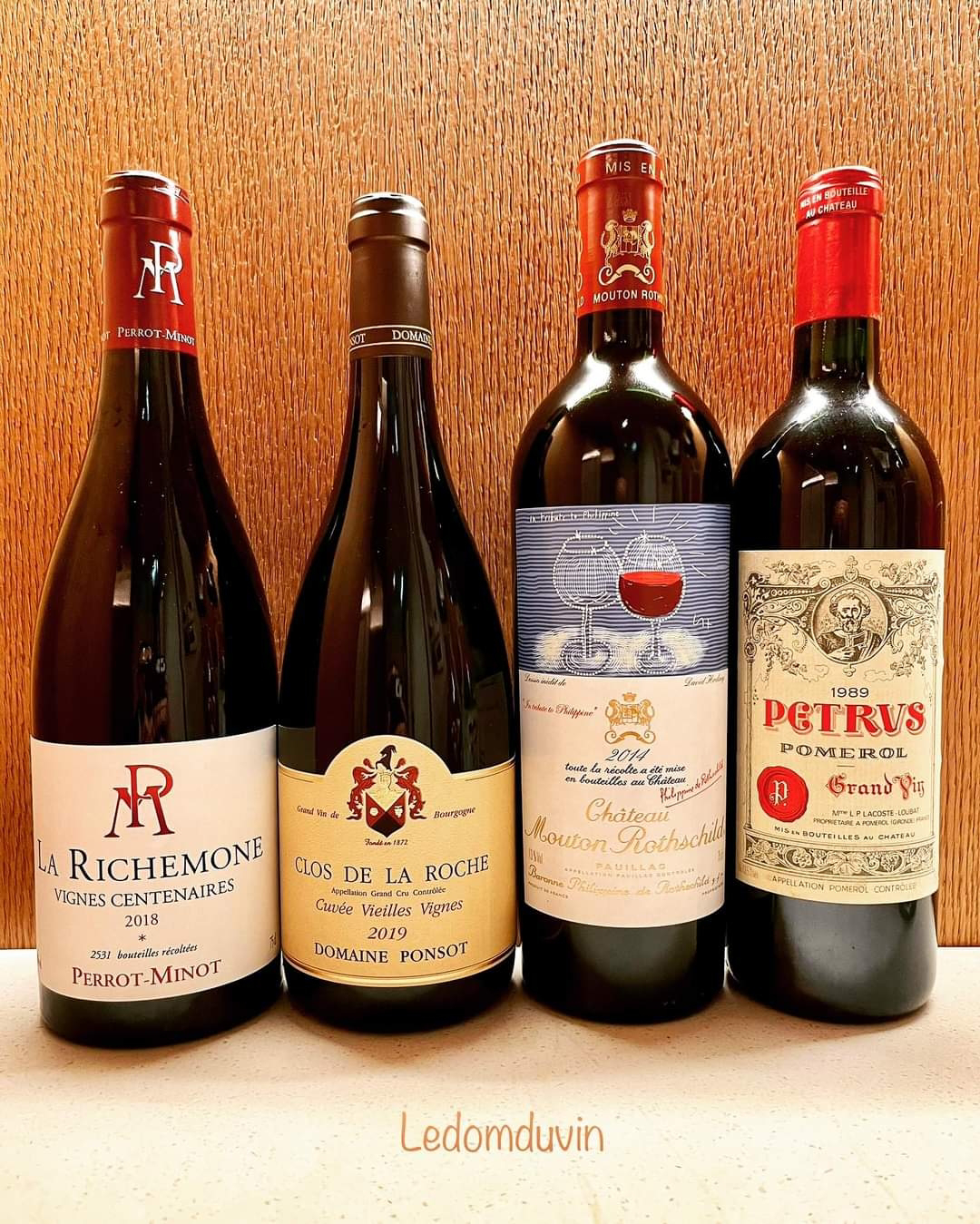
Today's « mise en place » for lunch. 
« Ça, c'est du lourd !!! » as we say in French!


Domaine Perrot-Minot Nuits-Saint-Georges 1er Cru « La Richemone » Vignes Centenaires 2018
A classic in my selection. I have opened several bottles these past ten months and absolutely love it. 


Domaine Ponsot « Clos de La Roche » Grand Cru Cuvée Vieilles Vignes 2019
Another classic in my book. It is the one I opened for today’s private lunch, and damn, that is a gorgeous wine!!! A stunning beauty! 


Chateau Mouton Rothschild 2014 Premier Grand Cru Classé Pauillac 2014
From a lesser vintage (a “classic vintage”, as they say in Bordeaux), it was not my choice, but it ended up in the selection. I did not open it this time. And, anyway, it is still too young, and more time will do it good. However, if you want to open it, decant it for about 3 hours before serving it. It should soften the dry, firm, slightly green tannins still in the finish. 


Petrus Pomerol 1989
I did not open this one as it was given as a gift to one of the guests. However, I was lucky enough to have opened many bottles in the last 12 years (especially at my previous job for nine years). It is a stunning wine, and this bottle was in pristine condition with a high level. I inspected it carefully, and, for those of you who may wonder, it was a real one. It must have been reconditioned at the property in the past 15 to 20 years; otherwise, it is impossible. It is a rare sight, as there are not many left in the market (real ones, I mean, as many Petrus from the 80s were counterfeited, so there are probably quite a few fake ones still out there).

I love my job! 

Cheers! Santé

Dom


@ledomduvin #ledomduvin #lesphotosadom #wine #vin #vino #wein #miseenplace #privatelunch @domaineperrotminot #domaineperrotminot #nuitsaintgeorges @domaineponsot #domaineponsot #closelaroche @chateaumoutonrothschild_ #moutonrothschild #pauillac #petrus #pomerol #grandvins #sommelier #sommelierlife #sommlife #ilovemyjob 


Unless stated otherwise, all rights reserved ©LeDomduVin 2023, on all the contents above including, but not limited to, photos, pictures, drawings, illustrations, collages, visuals, maps, memes, posts, texts, writings, quotes, notes, tasting notes, descriptions, wine descriptions, definitions, recipes, graphs, tables, and even music and video (when and where applicable).
Wednesday, August 2, 2023

LeDomduVin: Petrus! What else?


Petrus! What else? 


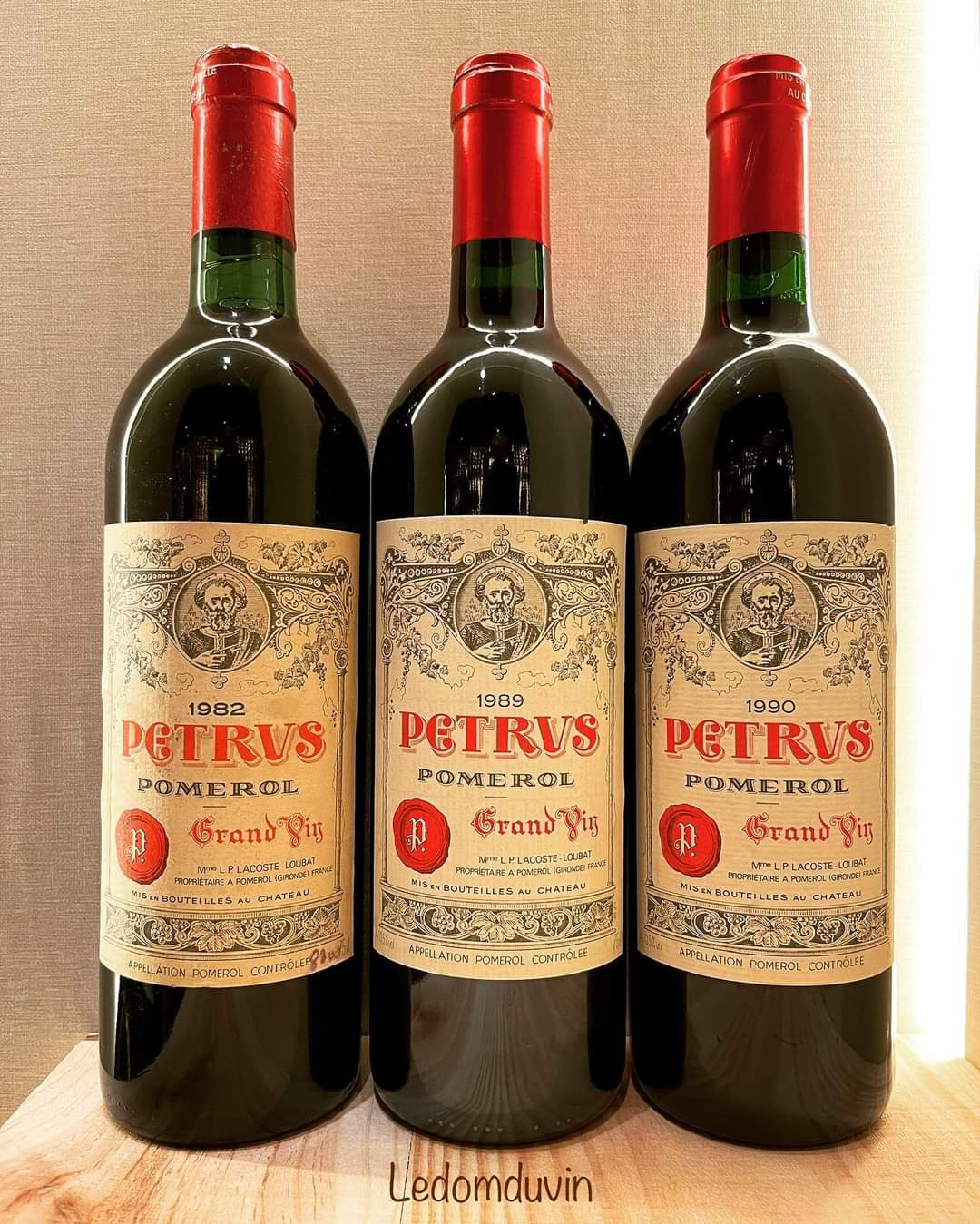
1982, 1989 & 1990

I posted so many pictures and posts on my social media and blog that some of you might think I have a cult fascination for Petrus. An obsession even. And you're probably right! 
Yet, who wouldn't? 

Isn't it fascinating that a wine could command such a high price? 

Isn't it fascinating that being so sought-after and coveted, it is one of the world's top 10 most counterfeited wines? 

Isn't it fascinating that it is so secretive and inconsistent regarding the details of the labels, even on bottles from the same vintage, that you (and even the most experienced of us) may never really know if the bottle you have in your hand is real or fake? 

My fascination for Petrus results from all of the above and beyond. 

I'm entirely fascinated by Petrus as it is so expensive. I always feel humble and privileged in its presence. 

Although I have never been able to afford such wine, it has always been a treat to be able to buy, open, taste and serve as many bottles as I did in my 32 years career as a Sommelier/Wine Buyer working for renowned restaurants, boutique wine retailers and large corporate companies. 

Fascinated also as, for 9 years in my previous job, I was a Wine Quality Control Director in charge of inspecting all the bottles we bought, especially those from Auction Houses and private cellars, and inspected so many bottles of Petrus.   

Fascinated as this wine is unconventional, famous yet mysterious, traditional yet modern. 

Secluded, discreet, old school, restricted, noble and anchored in the history of its terroir as one of the earliest vineyards established in Pomerol in the mid-18th century. 

And yet, at the same time, classic, sophisticated, contemporary, world-renowned, adulated, revered, and praised by the whole wine industry, collectors, connoisseurs, amateurs and beyond. 

Isn't it fascinating? 

Cheers! Santé! 

Dom

Photo taken in the cellar of one of our restaurants while inspecting some label and bottle details for a post on my blog. 

@ledomduvin #ledomduvin #wine #vin #vino #wein #petrus #pomerol #bordeaux #sommelier #sommelierlife #sommlife #legend #legendary #legendarywine #classicwine #lesphotosadom


Unless stated otherwise, all right reserved ©LeDomduVin 2023, on all the contents above including, but not limited to, photos, pictures, drawings, illustrations, collages, visuals, maps, memes, posts, texts, writings, quotes, notes, tasting notes, descriptions, wine descriptions, definitions, recipes, graphs, tables, and even music and video (when and where applicable).
Tuesday, March 14, 2023

LeDomduVin: The problem with Instagram (and other social media) algorithms and AI technology


The problem with Instagram (and other social media) algorithms and AI technology


Unbelievable, Instagram has deleted one of my pictures of a fake Petrus label ("Pacurs" - posted with a post I wrote on fake and counterfeited bottles) from my Instagram account for IP violation, stating that the right owner is S. C. Petrus. I'm sure the Moueix family will be happy to know that Instagram is associating fake labels like "Pacurs" (as seen in China) as part of their wines. 


Instagram is associating this fake label of Petrus with Petrus, stating that they are the rightful owners of this label, which is not the case. Petrus has nothing to do with this fake label. 

Moreover, if we want to go deeper, what does this IP violation mean? 

Does it mean that no one should post pictures of wine labels unless they are the rightful owner of the brand? 

That's insane! Millions of wine labels are posted on a regular basis on several social media networks such as Instagram, Facebook, Twitter, and even LinkedIn (and many others). 

So the question is: Will Instagram remove every single post with a wine label if not posted by the rightful owner of this label? That's insane!!! 

The other question is: Is Instagram going to apply this rule to all other brands? 

It's totally absurd


Let's talk further about Algorithms and Ai in general...

This situation with algorithms and AI is, unfortunately, a problem we may have to face more and more in the coming years. As excessive rules, digitalization, and zealous cyber security increase, it will become even more difficult to post anything else than AI-generated images that have no soul, no context, and no real meaning, except the one imagined by the one who vocally asked the AI or inputted the text to create that picture. 

And, there are already millions of AI-generated pictures posted on a daily basis on most social media and networks. You can easily recognize them by the quality of the image which either looks too perfect to be true or too weird to be real. The most risible to me are the ones with real pictures of the head and fake bodies, too perfect, too symmetrical, while we all know that nothing is symmetrical in the human body. It is so obvious, it is ridiculous.  

How sad and depressed can you be to search for such impossible perfection in a fake image of yourself? And what kind of satisfaction does it brings you except more despair and the dislike of your real self?   
I know that our society has become one of stereotypes and hopeless souls unable to face their life without hiding behind a screen, but still, one has to accept reality rather than find comfort in this ever-increasing fake digital world.   

Personally, I have been posting real pictures of real wine labels on my social media for years without a problem, except maybe for the people taking my pictures to use them for their own social media and websites, the reason why, over the last few years, I have taken the habit of always writing "Ledomduvin" on all my pictures (good or bad) to prevent this from happening.  

However, to take another example, recently, these last few months, Instagram has been implementing new rules, one of them being "Monetization & shops" (Branded Content and shopping). Consequently, for some of my pictures, IG is asking me if it is a "branded" post, and, if it is, to state the "brand partner", while my pictures are mostly wine labels of the bottles I open and taste while working during private and corporate events for the company I work for.  

Therefore, they have nothing to do with the brands or producers. And I'm not an "influencer", nor a "content creator". I do not "partner" with brands to make money from the content of my posts. But because the algorithms or AI in charge of verifying these things on IG cannot see or make the difference, it pops out the question on regular basis and may refuse the post, which is really annoying.      
Anyway, I could talk about it for hours or even days, but I do not want to bore you with this subject that has invaded our everyday life and has become so common that it has already been accepted by most people, as we do NOT have the choice, it has been imposed to us. So, what's the point? 

And, don't get me wrong, I'm not saying that algorithms and AI are necessarily bad things. On the contrary, for certain things, they both became essential in our daily life, and we wouldn't know what to do without them. Yet, I guess I'm old now (50 years old), and I'm part of a generation that grew up without and witnessed the rapid transition over the last 20 years. And I'm not saying that everything was better before, as I'm not against progress and the use of technologies to ease our life, but still, I preferred many aspects of our life as they were then rather than now.   

Take good care of yourself and your loved ones. 

Dom

#ledomduvin @ledomduvin #petrus #pacurs #fake #fakelabel #counterfeit #fakepetrus


Unless stated otherwise, all right reserved ©LeDomduVin 2023, on all the contents above including, but not limited to, photos, pictures, drawings, illustrations, visuals, maps, memes, posts, texts, writings, quotes, notes, tasting notes, descriptions, wine descriptions, definitions, recipes, graphs, tables, and even music and video (when and where applicable).

Sunday, November 6, 2022

LeDomduVin: Petrus 1995 or Petrus 1995?


Petrus 1995 or Petrus 1995


Find the mistakes... 😁👍🍷

This photo was taken about a year ago. I found it while sorting through my photos, so I no longer have the bottles or the corks to re-check unfortunately. 

I served these two bottles for a dinner, from a private cellar, so probably acquired separately, and no other bottles of Petrus 1995, so no choice. Forced to serve these two, side by side. 

The label on the left seems fake to me (paper lines, details, print quality, etc...) and it is placed/positioned too high on the bottle (and Petrus has a specific positioning of its labels on the bottle). On the other hand, the cork seems correct to me (as a whole), but the font of the vintage is the same as on the label, which could make me say that the cork is also fake. 

The label on the right is correct and seems to me to be genuine. Its position, (lower on the bottle), seems correct to me too, corresponding more to the usual Petrus label position on the bottle. On the other hand, the cork seems to me to be fake in the details and more especially the font of the vintage and the fact that it is in italics. 

Conclusion: 
  • Left: fake label, but real cork (or not?) 
  • Right: true label, but false cap 
In the end, both may be fake... 

And there was also a noticeable difference in taste between the two. 

However, you should understand that I do not want to go too much into all the details, as it would help the counterfeiters. Certain things are better left unsaid. 😁👍🍷🍷🍷


When I posted this post on Facebook, Instagram, and LinkedIn pages, (prior to posting here on my blog, as I do for most of my posts on this blog), a Bordeaux producer/Negociant, that for him, the vintage in italics could be correct? It seems surprising to me, as I never encountered a Petrus cork with the vintage in italic on it, but after all, why not? 

Even after 31 years of buying, selling, and serving Petrus, including the last 10 years as a Wine Quality Control Director, detecting fake bottles during physical inspections amongst all the bottles we purchased as my primary role, I thought that I had seen it all, but apparently not, as there are still things I don't understand about their labels and corks. 

The problem of finding different labels and corks, for the same vintage of Petrus, lies in the fact that: 

1. The market is filled with really good fake bottles that more difficult to spot, which is not surprising when you realize the price speculation on some of these bottles in specific vintages, as well as the growing market of full and empty bottles sold on Amazon, eBay, Etsy, Carousell, and other websites. 

PS: I personally always make sure to deface the labels and break the bottles of all the expensive bottles I served and used, more especially the ones with the name engraved on the bottle, like Petrus, Haut-Brion, etc... (watch my video on YouTube here) 

2. And, the known fact that Petrus has used (and maybe still uses) different printers and labels and corks, depending on the vintages and time of the release of the different batches of the same vintage. Otherwise, I don't see how to explain all these differences between genuine bottles of the same vintage, coming from the property and/or from the Bordeaux Negociants directly. 

This could come as a surprise for some of you, but it is true. Chateaux in Bordeaux, like most wine producers, keep a stash of bottles, each vintage: some to be kept within the Chateau's wine library for records and historical purposes;  the rest to be released in batches, later on, a few years later (2, 5, 10, 15 years later or more) understandably to ensure public interest, supply, and demand, releasing their wine usually at a much-increased price than the original "En-Primeur" release.    

If the various releases of their wine spawn over 2 or 3 decades, the problem is that they may not necessarily use the original printer, label, or cork design. More especially, if the chateau has changed ownership, and/or has changed the label and cork design.  And, despite being one of the most famous and expensive wines in the world, Petrus does not escape this reality either.

For example, for the 1995 vintage, in the picture above, the wine may have been released "En Primeur" in 1997, then 5 or 10 years later in small batches with a slightly different label and/or cork design. It is said that label and cork design may also occur depending on which market the bottles are destinated to (i.e. Europe, US, Asia, etc...). 

All these factors make for bad inconsistency depending mostly on the Chateau team's internal management and decisions, and obviously the time of the release of the batches, and it is a real "casse-tête" for wine buyers and wine quality control directors who have difficulties figuring out which bottle is real or not sometimes.  

Fortunately, most Chateaux in Bordeaux (and elsewhere) are more consistent with their label and cork design, making it less difficult to understand, yet easier for counterfeiters to create fake ones.  

And fortunately again, over my 31 years of career in the wine business, buying, selling, and serving most of the top wines in the world, including Petrus (which is one of my favorite wines), I have learned how to differentiate and spot the fakes from the real ones. Which is a good thing as, despite my profound respect for the Moueix Family and Olivier Berouet, all my emails to the estate (as Petrus is not a "Chateau"), over the last 10-15 years, have remained unanswered.  

Fight the grey market and the counterfeiters by 
  • always buying genuine bottles, in good condition and from good provenance, either directly at the property (when possible) and/or via official wine merchants, like the "Place de Bordeaux" (courtiers/négociants), which predominantly sell "Ex-Chateau" wines.      
  • defacing the label and/or breaking the bottles of all expensive and well-known brands that have a certain value in both the regular and the grey market.  


Meanwhile, as always, take good care of yourself and your loved ones, and drink responsibly.   

Cheers! Santé! 

Dom 


#ledomduvin @ledomduvin #lesphotosadom #wine #vin #vino #wein #petrus @petrus #pomerol #bordeaux #findthemistakes #findtheerrors #findthedifferences #game #fake #counterfeit #bottles #winebottles #winel


Unless stated otherwise, all right reserved ©LeDomduVin 2022 on all the contents above including, but not limited to, photos, pictures, drawings, illustrations, visuals, maps, memes, posts, texts, writings, quotes, notes, tasting notes, descriptions, wine descriptions, definitions, recipes, graphs, tables, and even music and video (when and where applicable).

Friday, September 9, 2022

LeDomduVin: Scrutinizing Petrus (again)


Scrutinizing Petrus (again)


Recently, a person I follow on Instagram asked me some questions about Petrus.


I answered to the best of my knowledge, yet, to back up the info I gave her, I went to one of our restaurants and gave a closer look at these 2 bottles of Petrus 2007, I found in the cellar.


Nothing wrong with these 2 bottles, fortunately. Yet, it was a good opportunity to do what I used to do best, prior to taking my current position about a year ago.


In my previous job, aside from being a Sommelier, I was also the Wine Quality Control Director for the entire company, for about 9 years, and, thus, spent a great part of my time checking and managing the company stock's quantities, as well as the storage conditions, quality, and security, including doing thorough inspections for all the wines we bought, stored and sold (quantity, quality, conditions, and genuineness).


And, I must say, I was very lucky to have a big boss who was a real wine lover, buying a lot of the top wines in the world, which allowed me to have access to (and even open, prepare, taste, and serve quite often), such beautiful, old and rare ladies (as I liked to call them).


Moreover, while, I gave them all the time and attention they deserved, I have learned a lot about fake and counterfeit wines, increasing my interest, broadening my experience, and perfecting my skills and knowledge in this particular field of the wine industry, which remains rather unknown and obscure, and is only practiced by a handful of people around the world.


I miss those days, sometimes, so, meticulously scrutinizing these 2 bottles of Petrus 2007 made me feel as if I was back in my old shoes as Wine QC Director, inspecting every detail to make sure of their genuineness and authenticity.

To prevent educating the counterfeiters, I cannot reveal everything I know, or, at least, not more than what I have revealed already in the many posts I wrote on the subject on my blog. It is like being a wine investigator or a wine detective, certain things are better left unsaid or to your interpretation. 😁👍🍷

Santé! Cheers!

Dom

#ledomduvin @ledomduvin #lesphotosadom #wine #vin #vino #wein  #inspection #wineinspection #petrus #fake #counterfeit #genuineness #authenticity 


Unless stated otherwise, all right reserved ©LeDomduVin 2022 on all the contents above including, but not limited to, photos, pictures, drawings, illustrations, visuals, maps, memes, posts, texts, writings, quotes, notes, tasting notes, descriptions, wine descriptions, definitions, recipes, graphs, tables, and even music and video (when and where applicable).

Wednesday, May 12, 2021

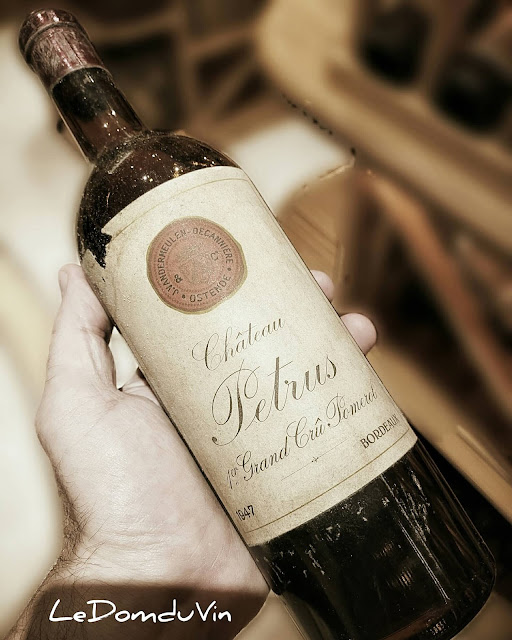
Petrus 1947 (J. Vandermeulen-Decannière label)


Petrus 1947  (J. Vandermeulen-Decannière label) by ©LeDomduVin 2021
Petrus 1947  (J. Vandermeulen-Decannière label)
by ©LeDomduVin 2021


Petrus 1947 
(J. Vandermeulen-Decannière label)


Not the first time I post pictures of that particular bottle, but I like that bottle. It is a valuable piece of history. It is also a remnant of a time long gone, when the Châteaux were still selling entire barrels of their wine to Negociants and other wine merchants (in Britain, Belgium, Netherlands, etc...), who in turn aged the wine in their own cellar, prior to bottle it and dress the bottle with their own labels and capsules. 

People may say "it is fake", but no, it is real. I had many opportunities to inspect it properly, and it is not a counterfeit. Moreover, it is a bottle that was bought, back in 2013, as a part of a series of J. Vandermeulen-Decannière bottled wines offered at a Christie's wine auction. 

Interestingly the colour of the bottle is red/amber, instead of the usual green (antique or darker), which is not unheard-of, but still quite rare. 

Another interesting detail is the mention of  "1er Grand Crû Pomerol" on the label, which on the Chateau label occasionally also appeared as "1er des Grands Crus Pomerol" and sometimes even "Cru exceptionnel"  on certain labels from certain vintages. 


Petrus 1947  (J. Vandermeulen-Decannière label) by ©LeDomduVin 2021
Petrus 1947  (J. Vandermeulen-Decannière label)
by ©LeDomduVin 2021


As Petrus label constantly changed with each vintage, even sometimes for the same vintage, as they used different printers and different fonts (yes, even for the same vintage), Petrus label is perhaps one of the easiest labels to counterfeit, making it one of the most difficult wine label to inspect and verify its authenticity. 

Always very privileged and humbled to be in the presence of such an old lady, a gem of a bottle, and take care of her. 

Cheers! Santé!

LeDomduVin (a.k.a Dominique Noel)


PS: Just a reminder that these bottles are not mine and they do not belong to me. They belong to a private cellar I take care of occasionally. And I probably will never get the chance to taste them.    


#petrus @petrus @chateaupetrus #pomerol #bordeaux #bordeauxclassic #legendarywines #france #vin #wine #wein #vino #lesphotosadom #ledomduvin @ledomduvin #nineteenfourtyseven #wineporn

Friday, December 27, 2019

LeDomduVin: Potentially Fake Petrus 1961


Petrus 1961 - Close up on labels ©LeDomduVin 2019


Potentially Fake Petrus 1961


A few days ago, my colleague and I cleaned up the wine cellar from all the empty bottles consumed within the company over the last few weeks (as we do monthly). 

And, as usual, I put some empty bottles of the oldest vintages and most expensive wines aside for 3 main reasons: 
  • First, because, even if empty, these old ladies deserve a second life as a trophy on a shelf in an office or in a cellar (or anywhere else), as, after all, they are pieces of history that have resisted the passage of time when they were corked and will continue even without their content. 
  • Secondly, because there is always a sense of pride for a Sommelier (like me) to keep old vintages of top-tears bottles around, more especially when I have had the pleasure to open, prepare, taste, decant (if necessary) and serve them (even drunk a part of them in some occasions), for memory's sake.    
  • Thirdly, and more importantly, it is very useful to keep them as they can contribute to constituting a library of references for genuine bottles and fake or counterfeit bottles. 
In fact, they can come in very handy for a Wine Quality Control Director (like me) when in doubt while doing an inspection or authentication of some bottles prior to purchasing them or receiving them at the warehouse to compare them and check/verify the authenticity of the bottles, labels, capsules, corks, etc...     


While putting these empty bottles aside, I noticed two magnums of Petrus 1961 (in the picture above), and I suddenly doubted the authenticity of these 2 mags, especially the magnum on the left-hand side of the picture. It presented too many obvious faults and defaults to my liking to be genuine. 

This prompted me to make a video about it (and logically, this post afterward) to try to explain the reasons why I believe it is not a genuine magnum of Petrus 1961 by comparing it to other bottles of Petrus 1961 I also kept in the cellar for that purpose.   


Here is the video and the link https://www.youtube.com/watch?v=CAiEz_gfaxY (if interested) 


Did you like the video? 

I tried to keep it simple and clear, but for those who did not get everything and may not want to watch it again to grasp some of the points they still have questions about, I will recap the main points discussed in the video further below in this post.  


However, before going into the details and reasons why I believe this is a fake magnum of Petrus 1961, let me tell you a little more about what I do and my roles and duties as a Wine Quality Control Director. A position that I have been occupying for the past 8 years now. 


What is a Wine Quality Control Director (QC)? 

To make it short, let's say that at my current job as a Wine Quality Control Director (for the Wine Division of a large corporate company), I'm in charge of the following:
  • Quality Control, 
  • Standard Operating Procedures (implementation and maintenance), 
  • Market Prices Analyses, 
  • Market Trend, 
  • Stock Valuation, 
  • Provenance, 
  • Authentication, 
  • Wine inspection prior to purchasing and at goods receiving, 
  • Supervising container unloading, 
  • Stock accuracy: inventory, stocktaking, cycle-counting
  • Wine warehouses and cellars QC operations (conditions, environment control and security), 
  • Prevention, 
  • Staff training, 
  • ERP System, 
  • Quality Management System, 
  • Compliance, 
  • Audits, 
  • etc...
(And even: Wine Classes, Wine Events, and Wine Promotion, as well as French tutoring, French Classes among other things).

I know it seems like a lot, but once managed as a daily routine, it is not that bad. 


Standard Operating Procedures

So, parts of my duties consist of creating and implementing Standard Operating Procedures (SOP) within the various departments related to the wine division (Purchase and Sales, Cellars and Logistics, and Quality Control, etc...) in order to clearly define step by step, the official or usual way that people are expected to do particular things within the respective departments of the wine division (or, to some extent, even within the company or organization). 

Once created and implemented, and adjusted/amended/corrected if necessary, depending on the evolution of the business model and the evolution and changes of the department's daily operations, I need to make sure they are compliant. They conform to the rules (such as specifications, policies, standards, and/or laws). 

Within the wine division, these procedures are put in place to manage and control both the people and  the goods, as well as the environments, conditions, and security, and clearly describe: 
  • How are daily operations conducted and done, and by whom?  
    • who does what, when, and how (and even why)
  • How things are to be done (and in which order) to prevent from 
    • a mistake, accident, or incident to happen
    • security to be breached 
    • and/or even theft to occur 
  • And what needs to be done and how, if any of the above occurs

These SOPs are created and implemented for all the following respective daily main operations at the office(s) and at the various points of storage (warehouses/cellars):
  • Purchase Order / Wine Receiving 
  • Wine Inspection / Authentication
  • Wine Receipt in ERP System
  • Put Away
  • Wine Transfer
  • Sales Order
  • Wine Withdrawal
  • Wine Delivery  
  • Wine Pickup
  • Others (too many to list them all)


Once the daily operations system and related SOPs are done and implemented, and the staff has been trained, I can focus on the product: "the wine".


Wine Provenance, Inspection and Authentication


My role as Wine QC Director consists predominantly in

  • verifying and/or counterchecking 
    • the reliability and integrity of the wine merchants we are buying from
    • the origin, provenance, and conditions of the wines (history of the bottles, previous storage conditions, etc...)
    • the cost prices compared to the market 
  • Do the bottle's inspection and authentication (if needed) before buying the bottles, if possible at good receiving, to prevent fake or counterfeit bottles of wine from entering our warehouses and cellars. 

For example, when our Purchasing manager wants to purchase wines, a specific SOP tells us that the following main steps (SOPs are generally more detailed, this is just an example) have to be done prior to being able to purchase the wine: 


Wine Purchase Simplified Process ©LeDomduVin 2019


A. Wine Purchasing

  • The Purchasing Manager (PM) 
    • receives an offer or receives a specific request from a client (or from the boss) 
    • sources the wine from Négociants or trusted/reliable wine merchants, 
    • negotiates a reasonable price to generate a minimum profit based on the current market price and availability
    • asks for a quotation

  • The Wine Quality Control Director (QC) (based on the quotation)
    • verifies the reliability and integrity of the negociant or wine merchant: 
      • Reliable? or trustable? 
      • Did we work with them in the past? 
      • How is our relationship with them?
      • Are they in possession of the stocks or not?
      • If not, where are the stocks? And what are the current conditions of storage?
      • Are they buying the wines directly at the property? Or via a negociant or official agent? or via a third party?  
      • Are they able to guarantee the conditions and provenance of the wine?
    • Verifies the integrity of the source: 
      • Honest about the conditions and provenance of the wines? 
      • Practicing fair prices?
      • Are they flexible with the payment terms as well as the shipping/delivery terms? 
    • Does a Market Analysis to: 
      • Establish the fairness of the quoted prices compared to the current market 
      • and verify the potential Gross Profit Margin (GPM) compared with the average market prices   
    • Is it possible to inspect the wines prior to buying them? If possible and if locally sourced;
    • If not, ask for high-res quality pictures (if possible, and/or documents/proofs of origin if available) of the wines (cases or even bottles if available) to determine:
      • the quality
      • the conditions
      • the authenticity    
      • the provenance
    • inform PM if the supplier is reliable or too expensive, etc...   

  • The Cellars and Logistics Manager 
    • Liaises with shipping companies and gets quotations to compare and estimate 
      • The shipping cost (door-to-door, reefer container, plane or boat, etc...)
      • the time of the shipping (when, how long, etc...)
    • Choose the shipping company based on cost/efficiency/security/service/quality (the cheapest are not always the worst, and the more expensive are not always the best either)
    • Liaises with the negotiant or wine merchant to arrange for shipping/logistics details
    • Arrange for the ETD (Estimated Time of Departure) and ETA (Estimated Time of Arrival) with both the negotiant or wine merchant and the shipping company
    • Inform and keep the warehouse team updated 


B. Wine Purchase Order Receiving


In most case scenarios, unless you buy directly at the property or from a Négociant or an official agent or a trusted wine merchant, it is going to be very difficult for you to get high-res pictures and/or documents/proofs of origin of the wines prior buying it. Let's say it's nearly impossible.

Same regarding the provenance and/or current (or even previous) storage conditions, there again, unless you buy directly at the property or from a Négociant or an official agent or a trusted wine merchant, you will never know if what they are telling you is the truth or not.

Yet, it is true that it may also happen with the Négociants, official agents, or "supposedly" trusted wine merchants. They may tell you that the wine comes directly from the property, while they may have bought it back from one of their clients or from a third-party seller. You'll never really know, in fact. You can only trust your guts, unfortunately.   

That's why it is very important to work with trusted wine merchants who can give some guarantee about the provenance or, if not, are willing to let you inspect the wines  (if sourced locally) and/or send you some high-res pictures of the wines for you to check them prior to buying them.

But because it is not always possible to check them prior to buying them (either physically or on pictures), even with the merchants you know and trust, that's where the role and job of Wine Quality Control is crucial, as he or she will have to inspect and/or even authenticate the wines at good receiving at the warehouse (or at the store or wherever they have been ship/deliver to) prior storing the wines, in order to immediately inform the vendor and sent the wines back, if not satisfied and/or if the conditions are not as described on the email, the catalog, the pictures or any other documents provided prior buying them.

The SOPs state that at good receiving:
  • The Cellars and Logistics Team
    • Arrange for delivery time at the warehouse
    • Unload the truck or container, weigh the pallets/cases, and mark them
    • Count the pallets, cases (and eventual loose bottles) based on the shipping documents and the purchase order delivery note 
    • Bring the wines to the inspection zone (usually an area prior to or within the storage area dedicated to inspecting the wines prior to being put away in the storage area)
  • The QC team 
    • Supervise/help with the unloading of the truck or container
    • Take pictures during the unloading to have proof of how the pallets/cases were when they were delivered and unloaded
    • Make sure that none of the wines have been put away in the storage area without being inspected first
    • Proceeds to the inspection prior to the Cellar and Logistics team putting the wines away


Wine Inspection - Authentication basic tools by ©LeDomduVin 2018


C. Wine Inspection


  • The QC team proceeds to the inspection case by case
    • A case of wine is put on the inspection table or bench
    • If the case is an unopened Original Wooden Case (OWC) or Orignal Carton Box (OCB):
      • the case/box is not opened
      • it is inspected carefully to check of any signs/traces of opening attempts 
        • If pristine, a sticker or security tape is put on it
        • If not pristine (meaning there are signs/traces of a previous opening), the case has to be opened  
      • the case is weighed to check if it has a correct weight
        • If correct, a sticker with the case weight is printed and put on the case
        • Then the case/box is banded with a band featuring the company logo for security reasons
        • If not correct, the case has to be opened to check its content 
    • If the case has been previously opened, then tape resealed or nail closed (no matter if OWC, OCB, or not) and or if the case/box has not been opened, but it is not an OWC/OCB and/or does not present any markings of any kind to indicate what is in the case/box, then it has to be opened to do the quantitative/qualitative inspection in order to check the quantity and quality (conditions) of its content.
    • QC staff should always come prepared for an inspection and have their tools at ready for inspection (here is a list with the most essential items to have for a wine inspection)
      • A portable LED flashlight (or light torch, however you call it) if it does blacklight even better 
      • A magnifier
      • A ruler
      • A cutter
      • Transparent tape
      • Tissue paper or wet tissue
      • A rollerball pen or a permanent marker
      • Small size Post It paper
      • A camera or smartphone to take pictures
    • During the inspection/authentication process, QC checks and takes pictures of the following (taking into consideration the vintage and origin of the wine, of course):
      • Overall bottle conditions
      • Label (pristine or damaged)
      • Capsule (pristine or damaged)
      • Level (correct, too high or too low)
      • Cork (depressed or protruding, check the vintage if possible for old and expensive bottles, and only if previously agreed with the vendor)
      • Color (correct, too young, too old) 
      • Sediments (present or not)
      • Bottle marks 
    • If all the bottles of wine in the same case pass the inspection: 
      • The bottles are carefully put back into the case/box, 
      • The case/box is turned resealed/closed
      • A piece of security tape or sticker is affixed on the case/box,
      • And/or the case/box is banded
      • The case/box can now be given back to the Cellar and Logistics team to be put away in the storage area
    • If some of the bottles of wine in the same case do not pass the inspection: 
      • The full case is put aside (either in the inspection area if secure or right behind the door at the storage area entrance, not to be put away yet and not to be mixed with other cases either).  
      • An email including details of the discrepancies/defaults + pictures is sent immediately to the vendor
      • Negotiations begin on getting something for the unsatisfactory bottles, either: 
        • a replacement
        • and/or a discount 
        • and/or send back the bottles and get partial or full reimbursement  
      • Depending on the negotiation's result, 
        • Bottles are replaced
        • A new invoice showing a discount is sent
        • The bottles are sent back and reimbursed


Although continuing on the subject might interest you, I will stop here regarding the SOPs (Standard Operating Procedures). Otherwise, you will be bored reading all these details. (if interested in the inspection's details, read my previous posts on the subject here)


However, the reason I wanted to share with you (parts of) these SOP details is to show you that we have an elaborate system in place to prevent fake and counterfeit wine bottles from infiltrating our warehouses and cellars in our various storage locations and that theoretically we should not have any suspicious bottles in our stocks (either fake or counterfeit or just in bad conditions) like this magnum of Petrus 1961.


Petrus 1961 - Close up on the suspicious label ©LeDomduVin 2019


Yet, this is not the case. The proof is that the suspicious magnum of Petrus 1961 (in the picture above) managed to get into our stock.     


💥Work in Progress - to be finished 💥


Cheers! Santé!

LeDomduVin (a.k.a. Dominique Noel)


NB: Over the last few years, I wrote quite a few posts on or including fake and counterfeit wines (if interested read the 2 most detailed ones here and here)


#wine, #fake, #fakewine, #wineinspection, #ledomduvin, @ledomduvin, #fraudulentwine, #wineeducation, #wineknowledge, #wineauthentication, #couterfeit, #counterfeited, #vin, #vino, #wein, #petrus


Unless stated otherwise, all rights reserved ©LeDomduVin 2019, on all the contents above including, but not limited to, photos, pictures, drawings, illustrations, collages, visuals, maps, memes, posts, texts, writings, quotes, notes, tasting notes, descriptions, wine descriptions, definitions, recipes, graphs, tables, and even music and video (when and where applicable).